NARCISSUSISUS
Mansour Al-Amin, Kiah Butcher, Manuel Ferreira, Sharifa Lafon, Jenny Nagashima and Brooke Tomiello
Lane Meyer Projects is pleased to present Narcissusisus, an exhibition by 6 curators: Mansour Al-Amin, Kiah Butcher, Manuel Ferreira, Sharifa Lafon, Jenny Nagashima and Brooke Tomiello
December 12, 2025 - January 25, 2026
Opening Reception: Friday, December 12, 8pm - late
Closing Party: Saturday January 24, 4pm - late
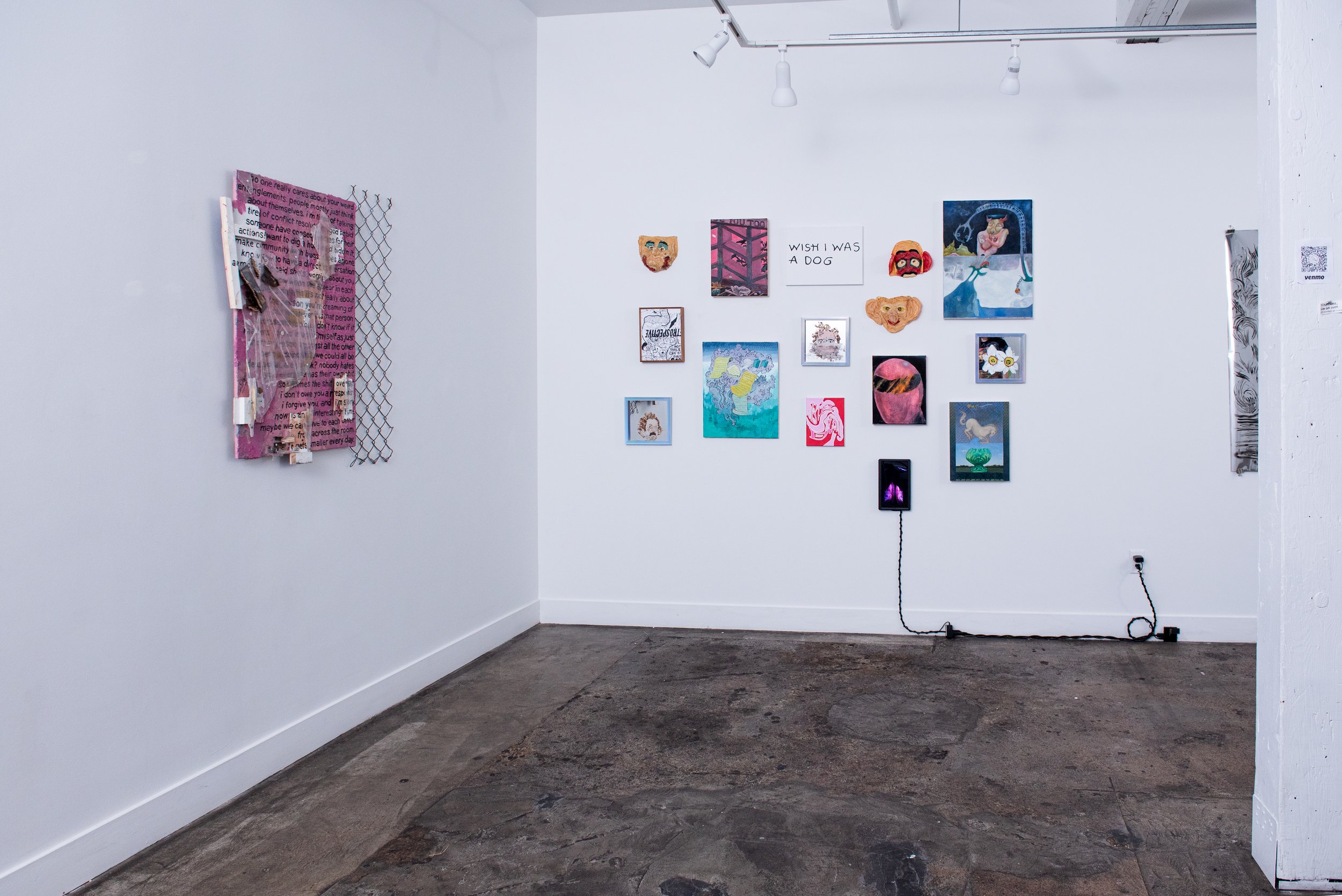
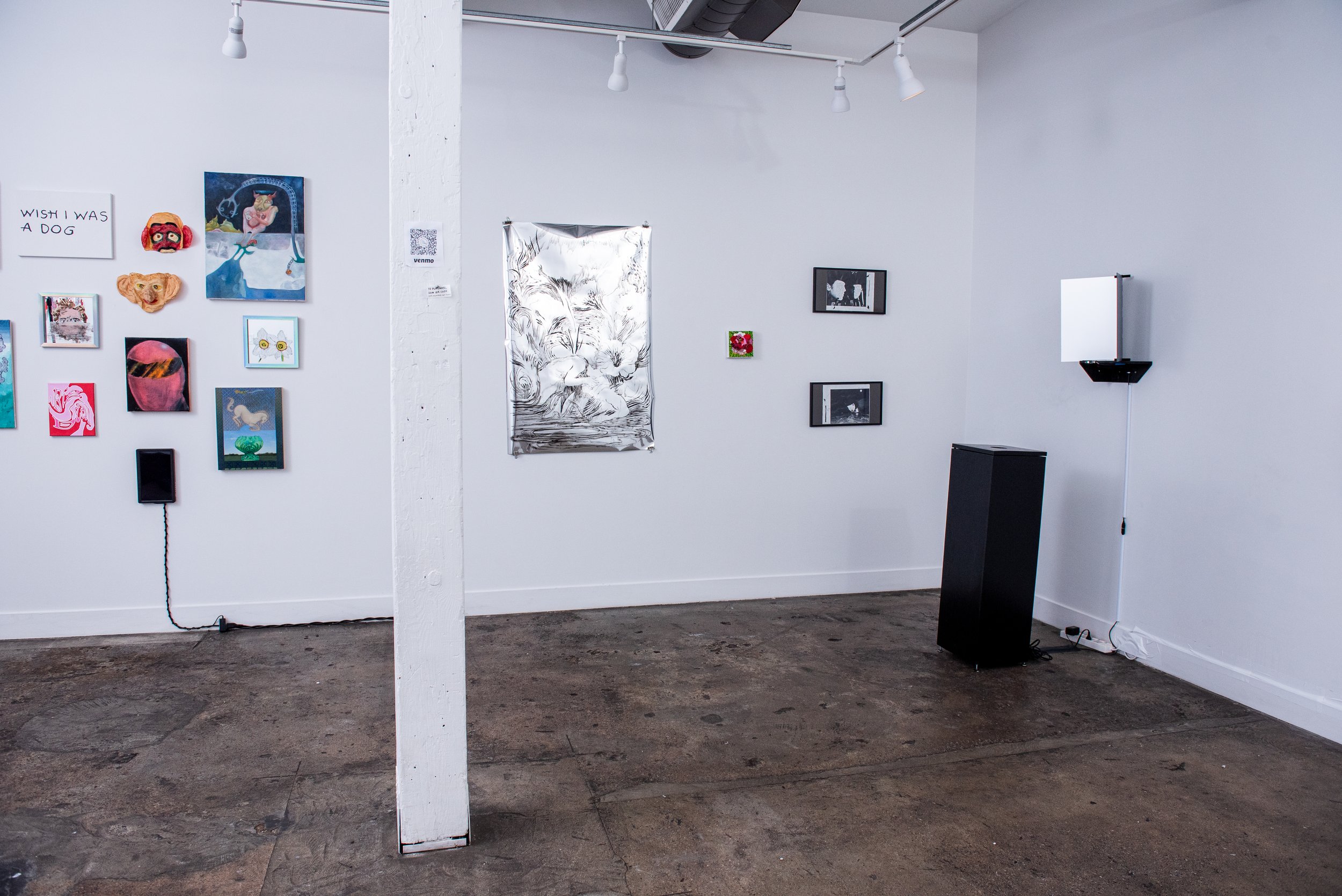
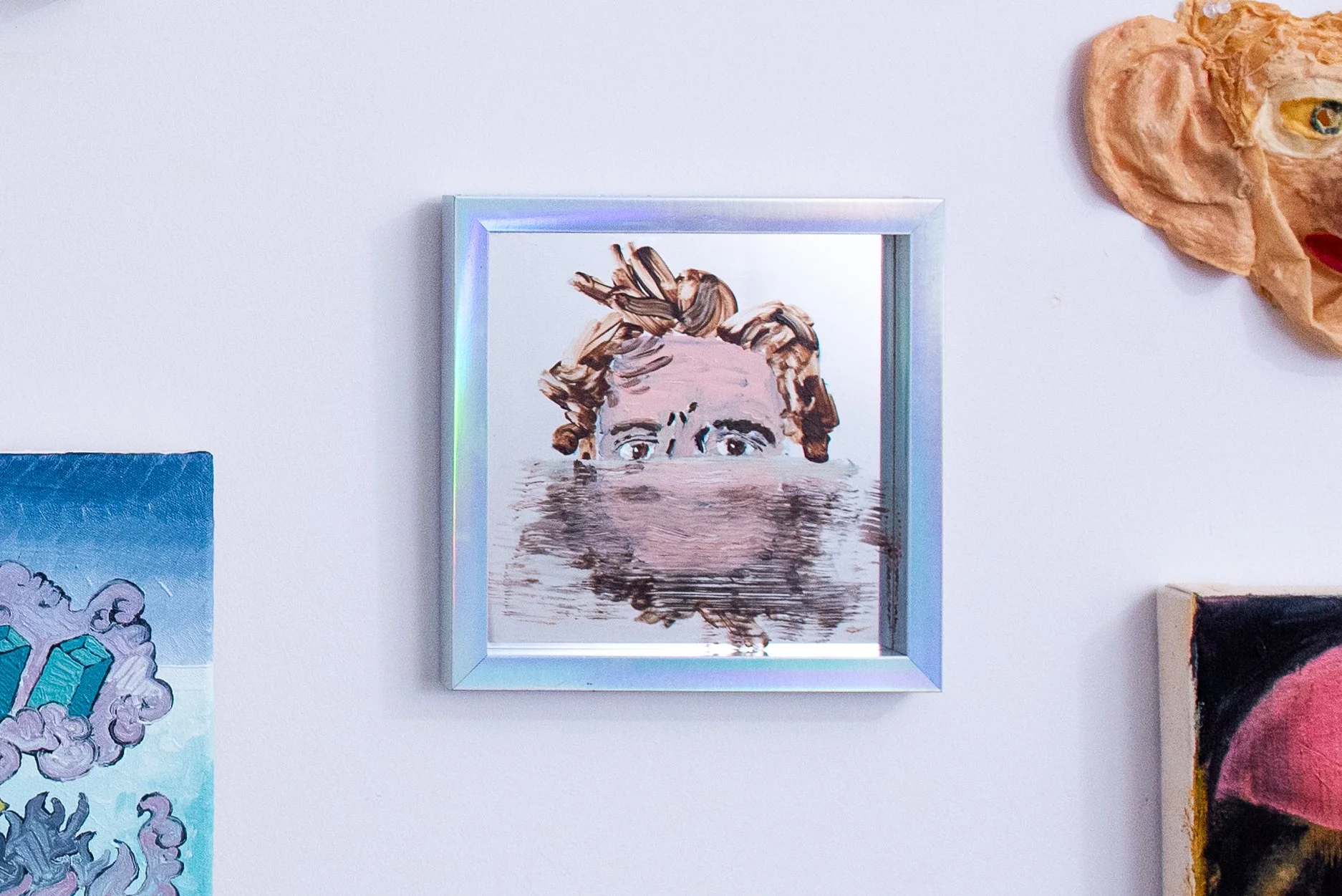
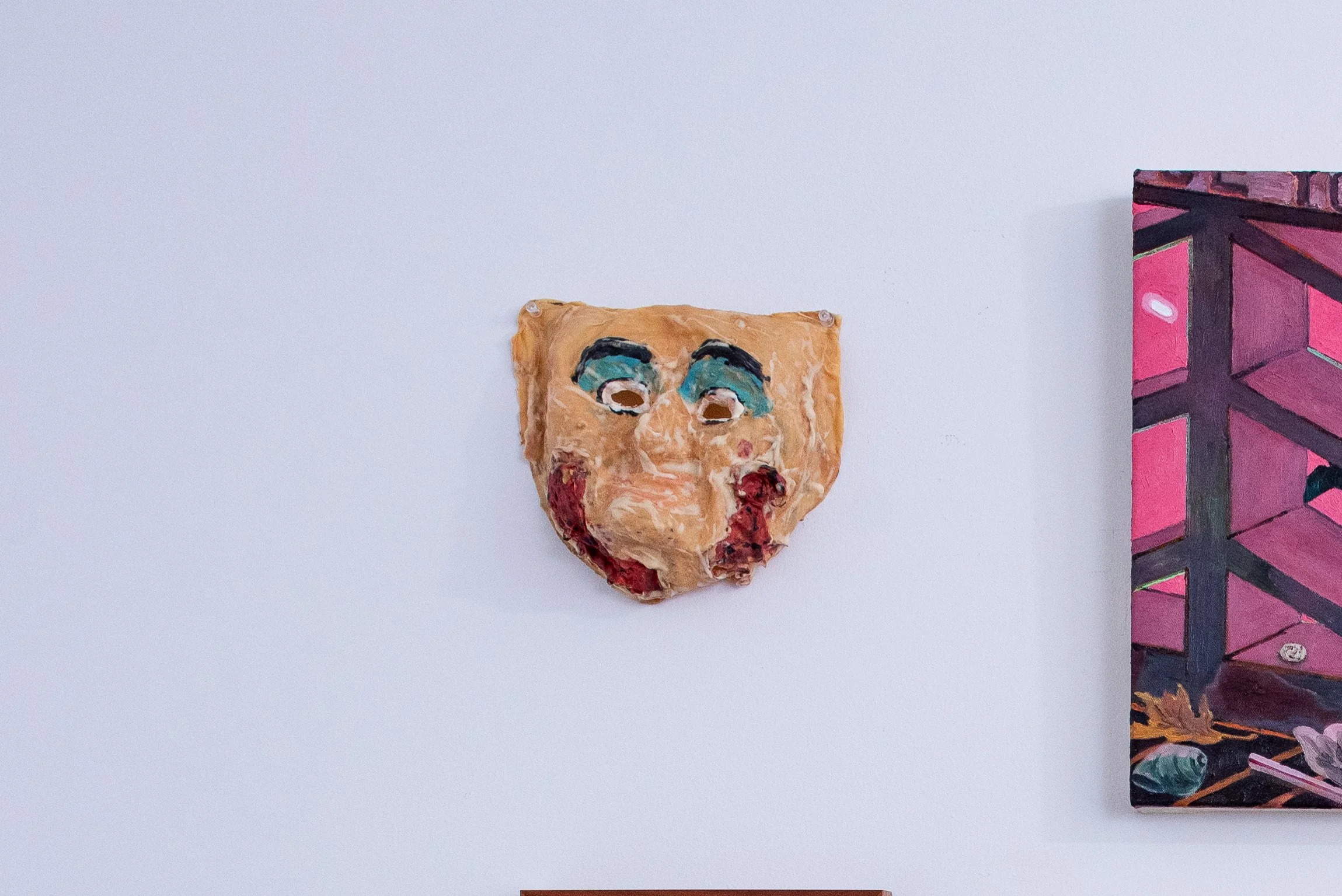
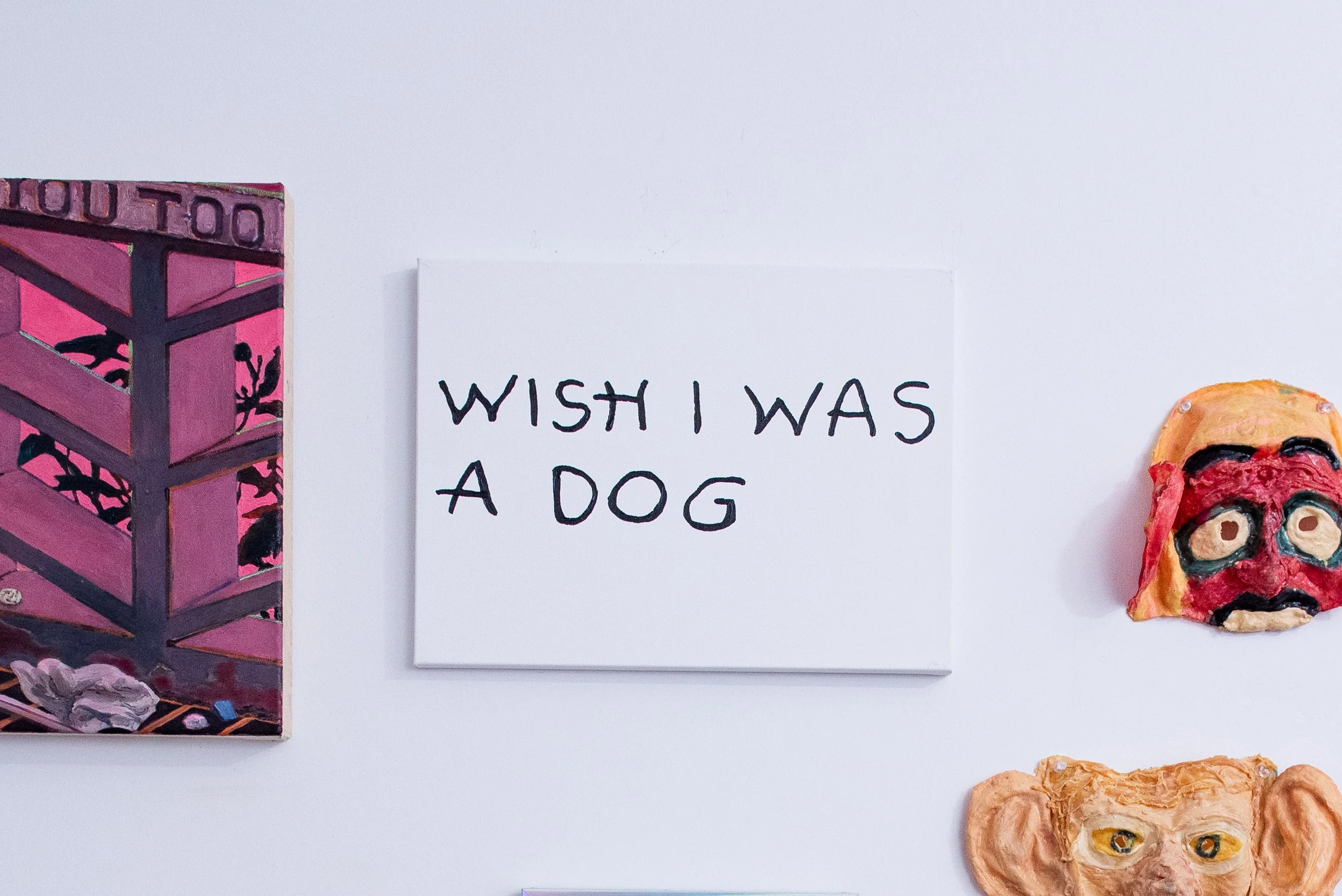
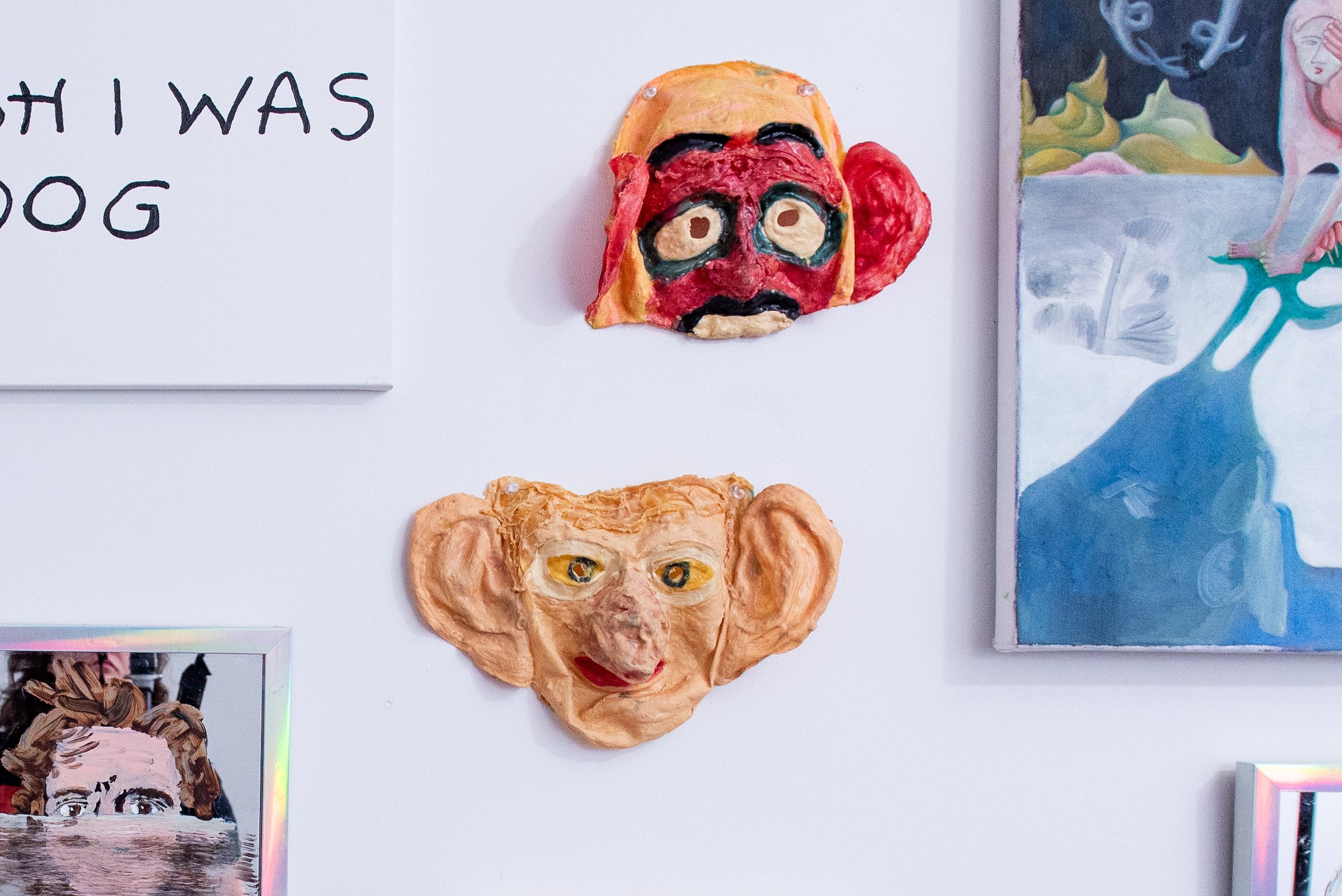
To bring 2025 to a close, Lane Meyer Projects is exceedingly proud to present Narcissusisus, an expansive group exhibition featuring 6 Denver-based curators: Mansour Al-Amin, Kiah Butcher, Manuel Ferreira, Sharifa Lafon, and Jenny Nagashima, invited by and including Brooke Tomiello. Drawing from their respective art networks and social circles, each curator is responsible for an 8 foot section of wall in the gallery. A celebration and a critique of the inner workings of opportunity in the arts, Narcissusisus is an invitation to reflect.
Boasting a list of over 20 artists from around the country, Narcissusisus makes no claims to objective curation; artists featured are friends and art community - the notion of the “art world” as insular and built on nepotism is the driving concept behind the exhibition. Yes, featured artists are wildly talented, unique, and skilled, and yes, they are likely personal friends of the curators and have long standing ties in art circles. This unspoken truth is a strength and a weakness of all industries, creative and fine art spheres not excepted. This truth, however, does not preclude works from being deserving of our attention.
Both deathly serious and totally just kidding, Narcissusisus satirizes the idea of capital “A” art, placing its infamous cliquishness and self-importance front and center. This open secret is attacked from six fronts, as curators operating in different modes with varied interests and specialties share space in Tomiello’s final exhibition as Director and Curator of Lane Meyer Projects. Narcissusisus lets viewers in on the joke while simultaneously embodying it.
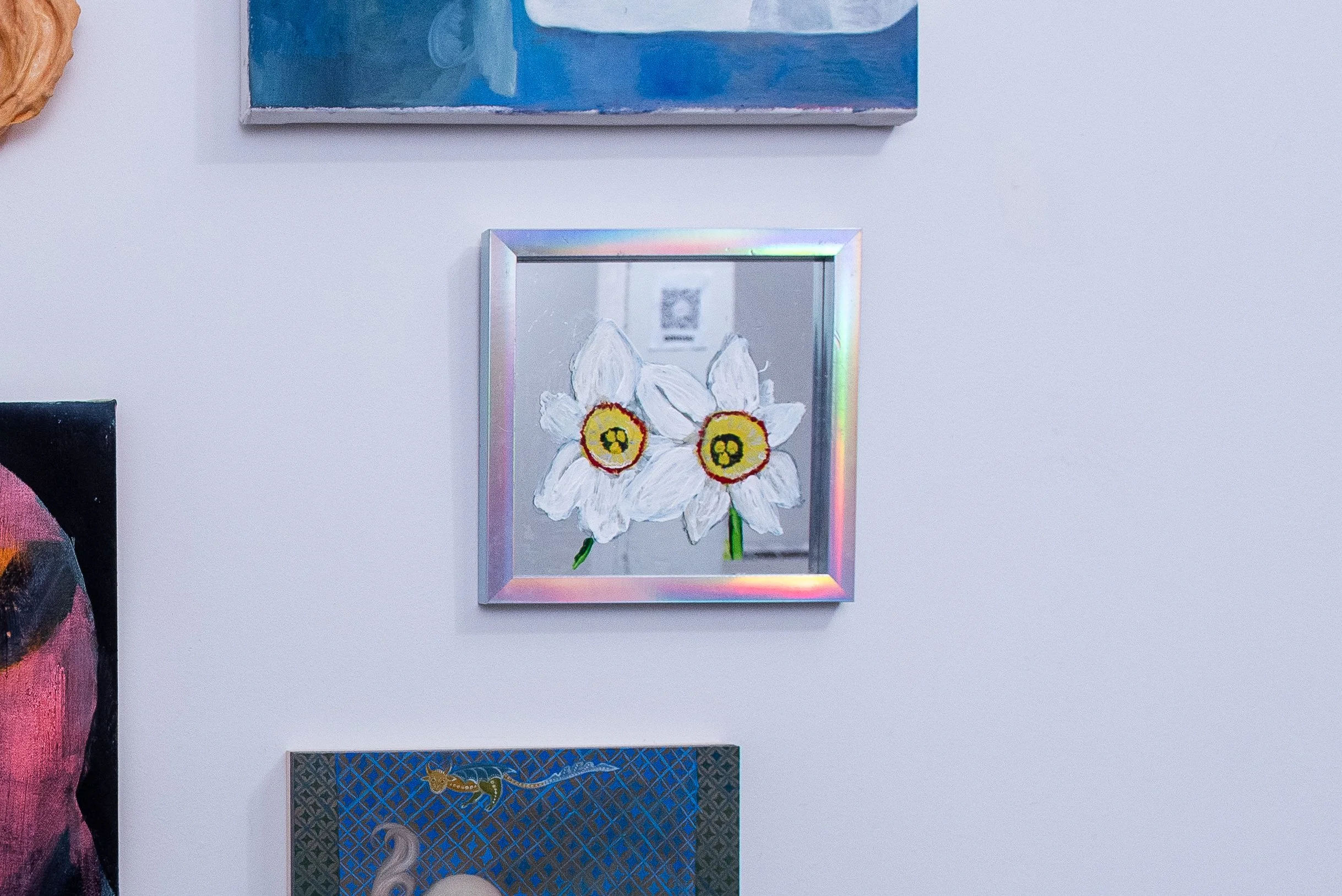
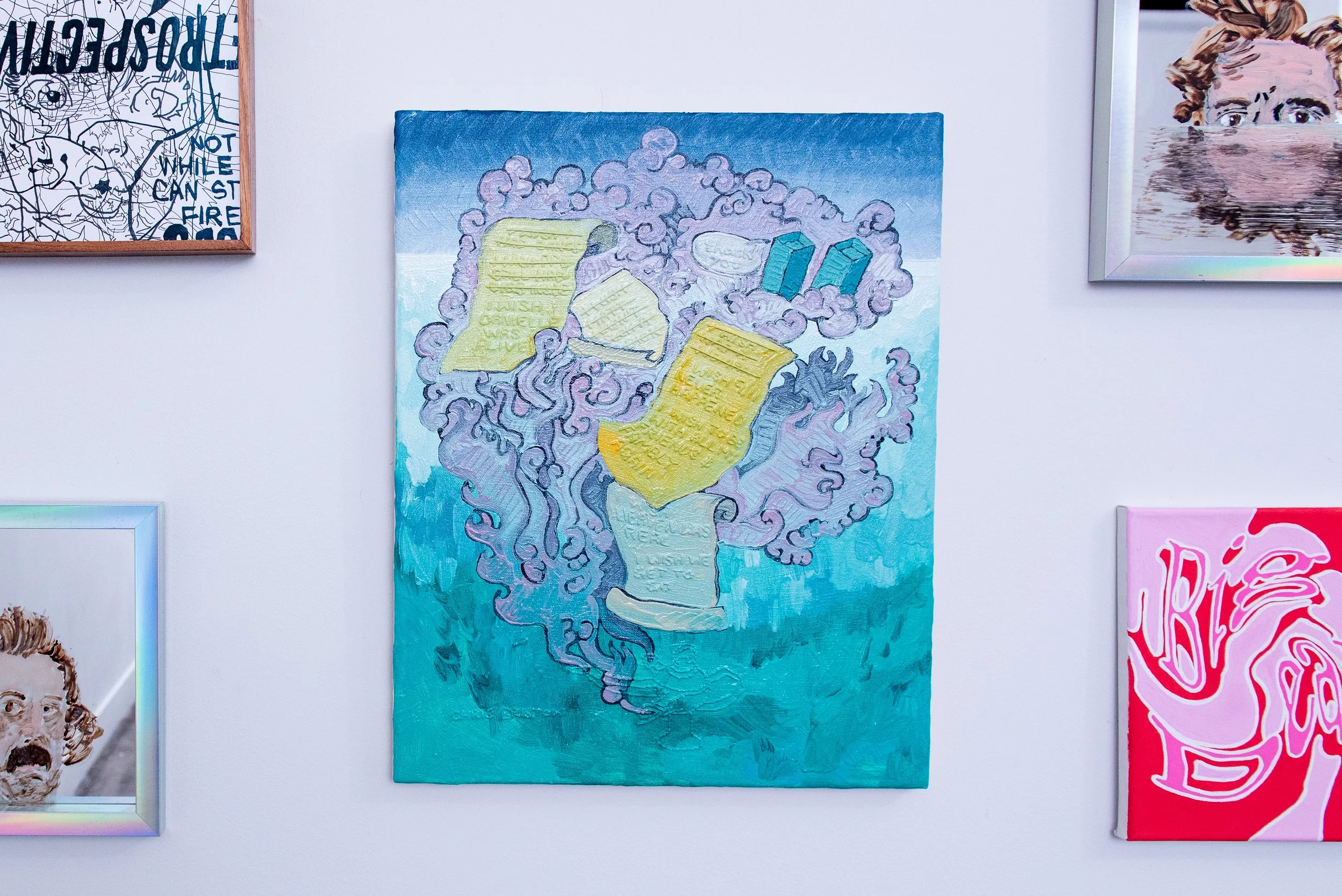
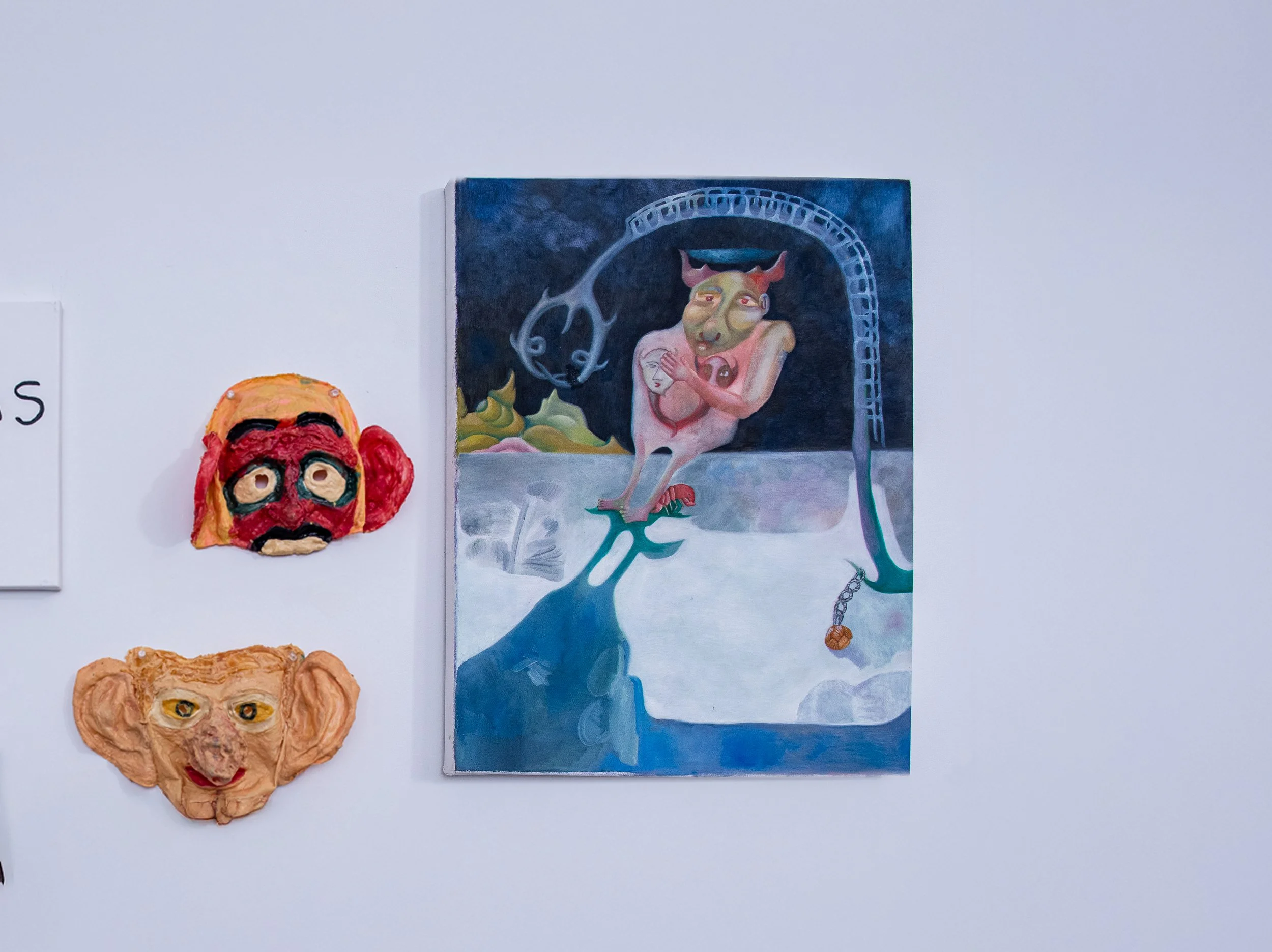
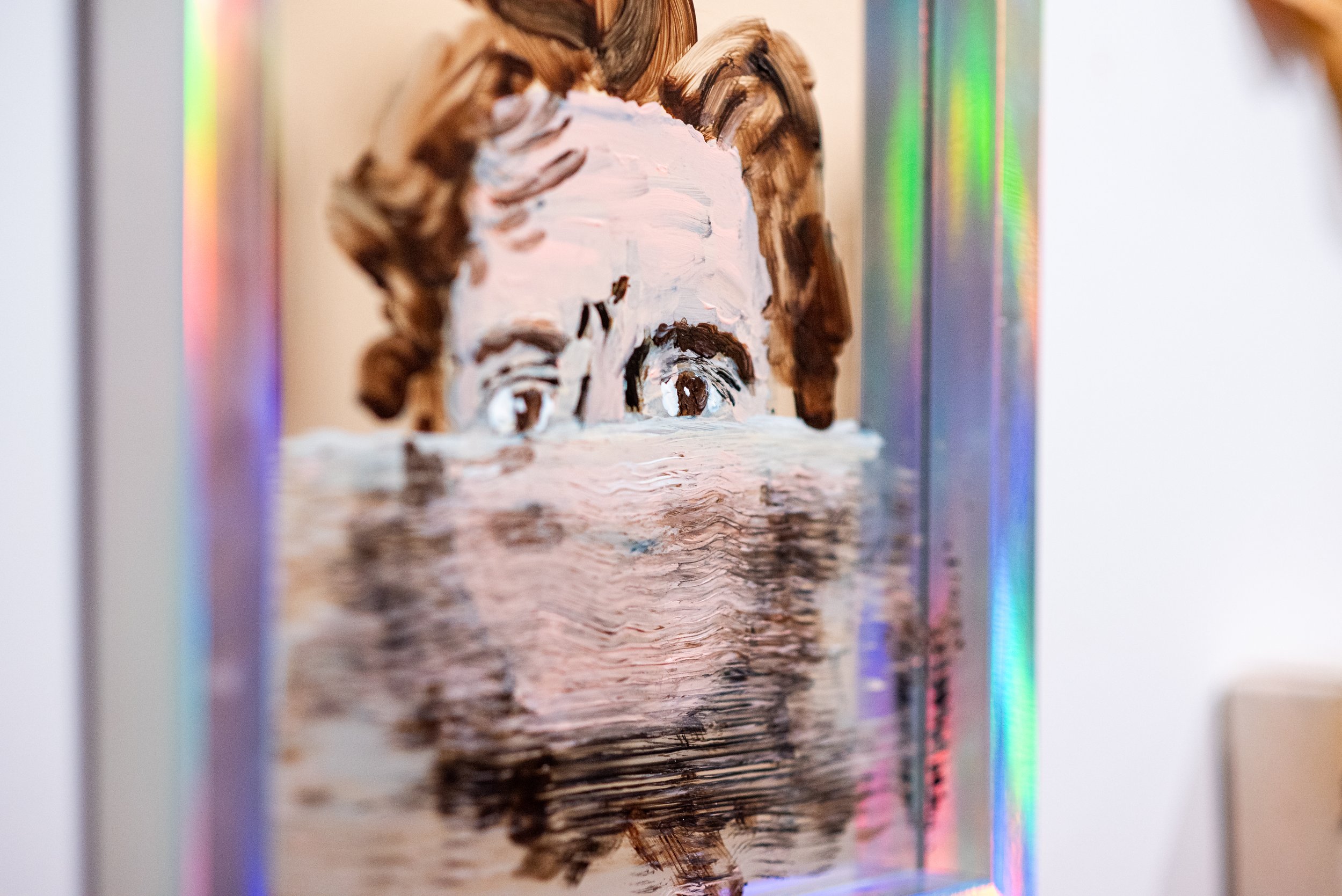
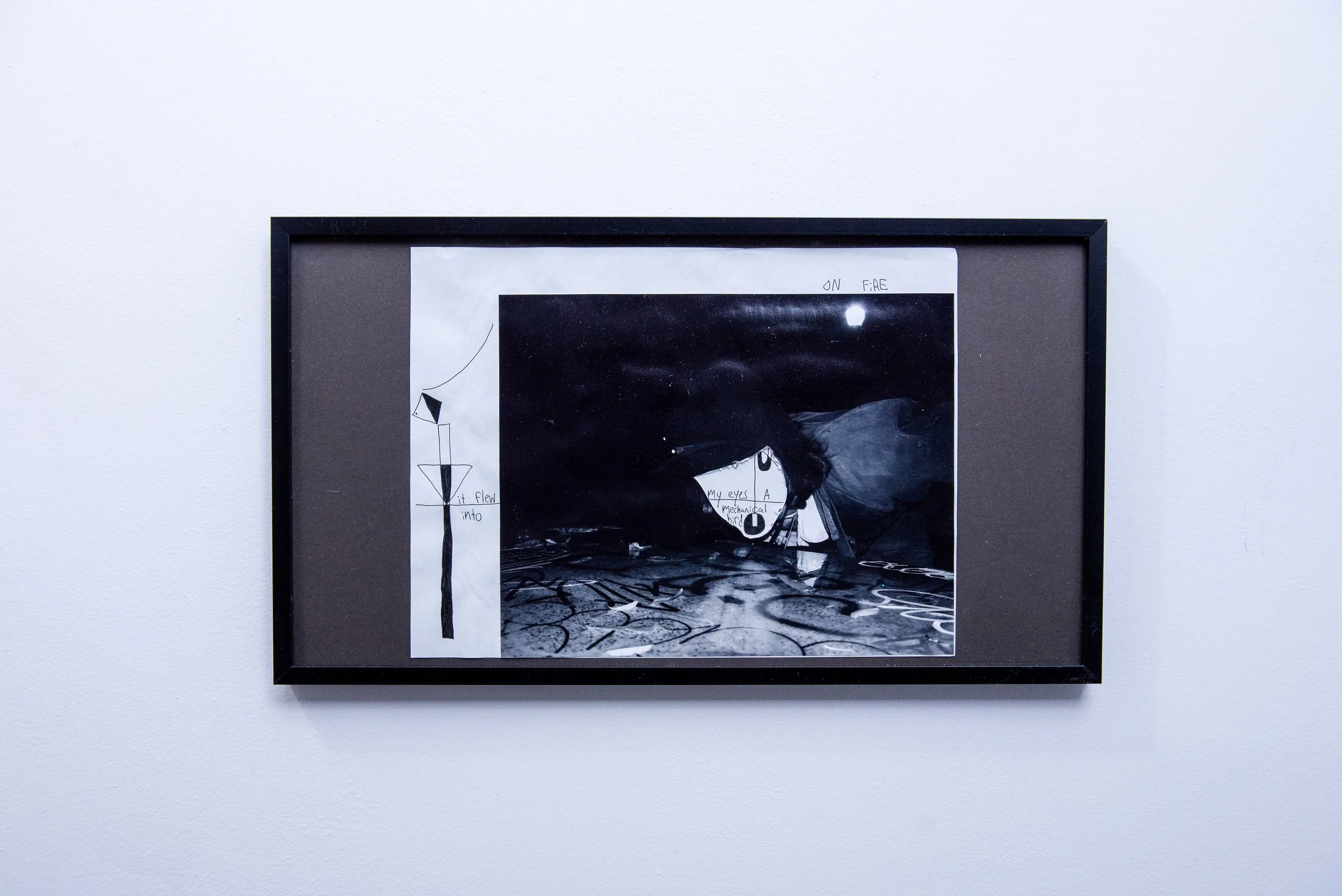
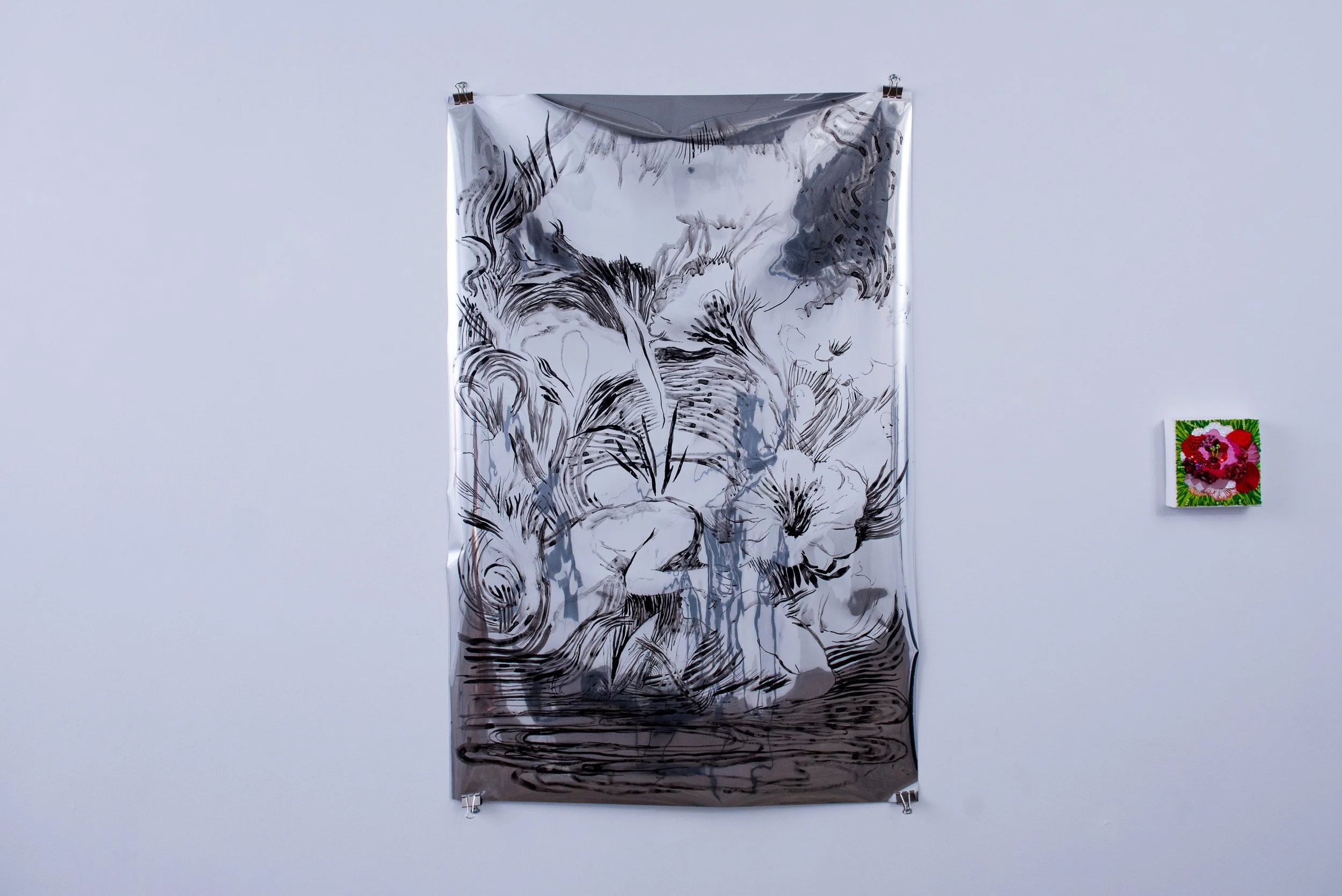
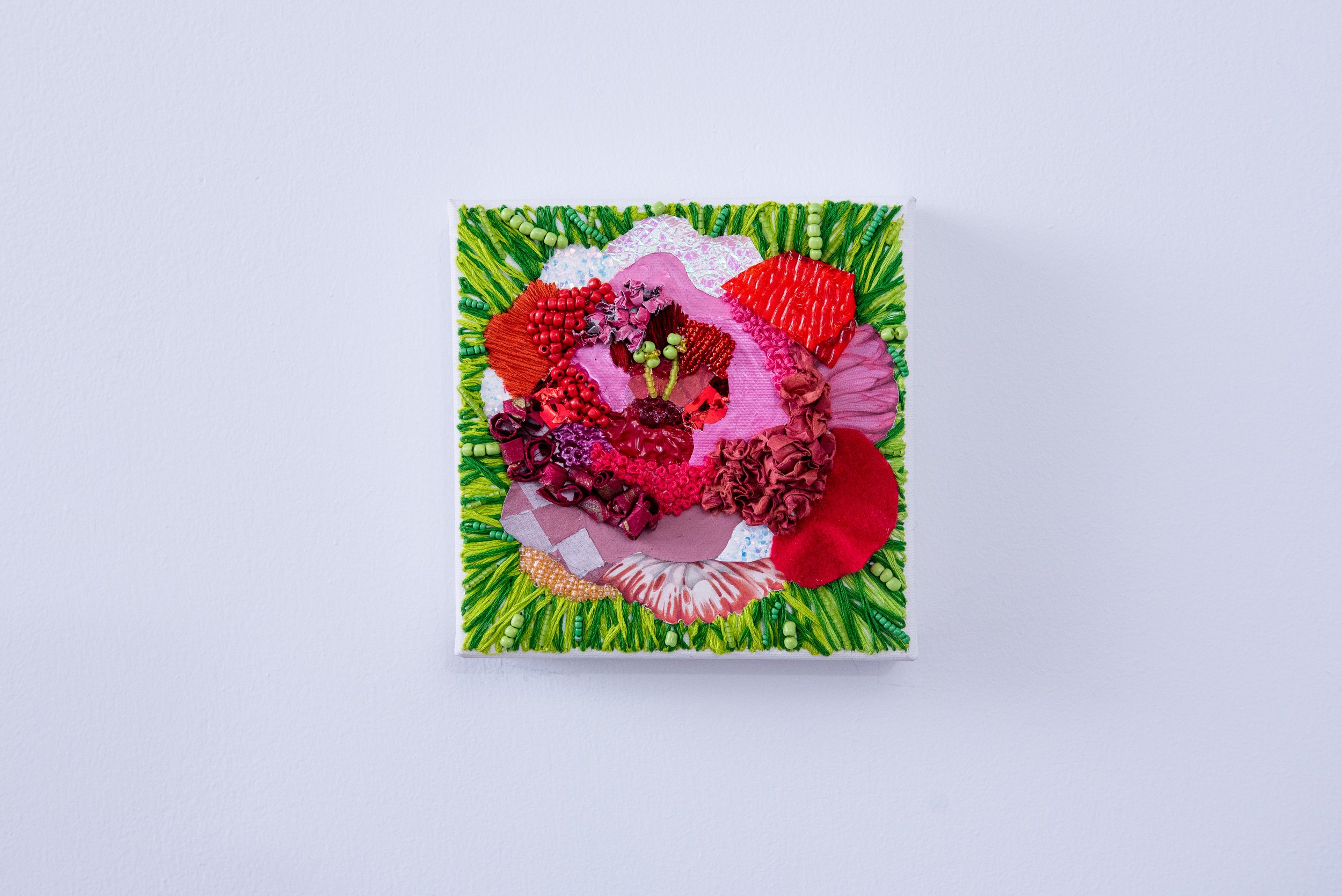
Artists include Audrey Bialke, Chris Bristow, Kate Casanova, Canyon Castator, Srikar Hari, KT Hickman, Ray Hwang, Lisa Larson-Walker, Francesca Lipinsky, Michael Mahalchick, MaryV, Olivia Oyamada, Ian Park, Corey Presha, Cyrena Rosati, Aaron Storck, RJ Supa, and Magnus Vogel.
Written by Marsha Mack
Please see bartender or email lanemeyerprojects@gmail.com for purchase inquiries.
You can also talk to us about our payment options :)
Thanks to Denver Theatre District for the MicroGrant awarded!
Curator Bios:
Mansour Al-Amin is first and foremost curious. His background hugs a variety of twists and turns that continue to contribute to his unique perspective. Gallery manager, high end carpenter, and DJ/promoter are a few of the hats he has worn over the years. Originally from Chicago, he has called Colorado home for more than 10 years.
Kiah Butcher is an independent curator with a focus on uplifting and engaging community. Butcher presents contemporary art in museum and public spaces; from site-specific installations, to open community exhibitions. In addition to her curatorial practice, Butcher is a video artist and filmmaker, working primarily with new media, video and photography. Inspired by the passing of time, repetition and the human attention span, she uses theatrical conventions to create and celebrate work that unites viewers in small, timeless moments.
Manuel Ferreira is a museum professional specializing in visitor engagement, interpretation, and culturally responsive programming. Since 2022, he has worked as an Interpretive Specialist at the Denver Art Museum, where he develops accessible and engaging interpretive experiences for diverse audiences across exhibitions focused on arts of the ancient Americas, Latin American art, and modern and contemporary Latin American art, arts of Oceania, and arts of Africa.
With a background spanning curation, collections management, exhibition design, education, and visitor research, Ferreira has worked across art, anthropology, and natural history institutions. His approach bridges scholarly research with audience engagement, creating inclusive interpretations that connect visitors with art and cultural narratives. Previously, as Curator of Collections and Exhibitions at the Logan Museum of Anthropology at Beloit College, he led collaborative projects exploring migration, identity, and other complex social topics.
Ferreira is a regular speaker at professional conferences, addressing representation in the field, community partnerships, and museums' evolving role in contemporary society. His work is grounded in a commitment to fostering meaningful museum experiences that emphasize inclusive practices and the transformative power of art. He holds a BA in anthropology from Lawrence University and an MA in anthropology with a concentration in museum and heritage studies from the University of Denver.
Sharifa Lafon (she/her) is a curator and artist working across media arts and community engagement. Her creative practice explores perception, embodiment, and ecological interconnection, often using time-based media to create affective experiences that center non-commercial exchange and relational forms of collaboration and care.
Jenny Nagashima is a curator living and working in Denver, CO. She has a BFA in Art Practices from the University of Colorado, Denver and a MA in Museum Studies from Johns Hopkins University, and has held various positions at organizations in Denver and beyond. Jenny is currently a Co-Director at Friend of a Friend, Lecturer at CU-Denver, and a Curatorial Assistant at the Pardon Collection.
Brooke Tomiello is a curator based in Denver, CO. She has a BFA in Visual and Critical Studies from the School of Visual Arts (New York, NY). Brooke has been independently curating since 2012 in New York, Colorado and Germany. Her focus is in emerging and mid-career artists and their connection and opportunities within alternative spaces.
Artist Bios:
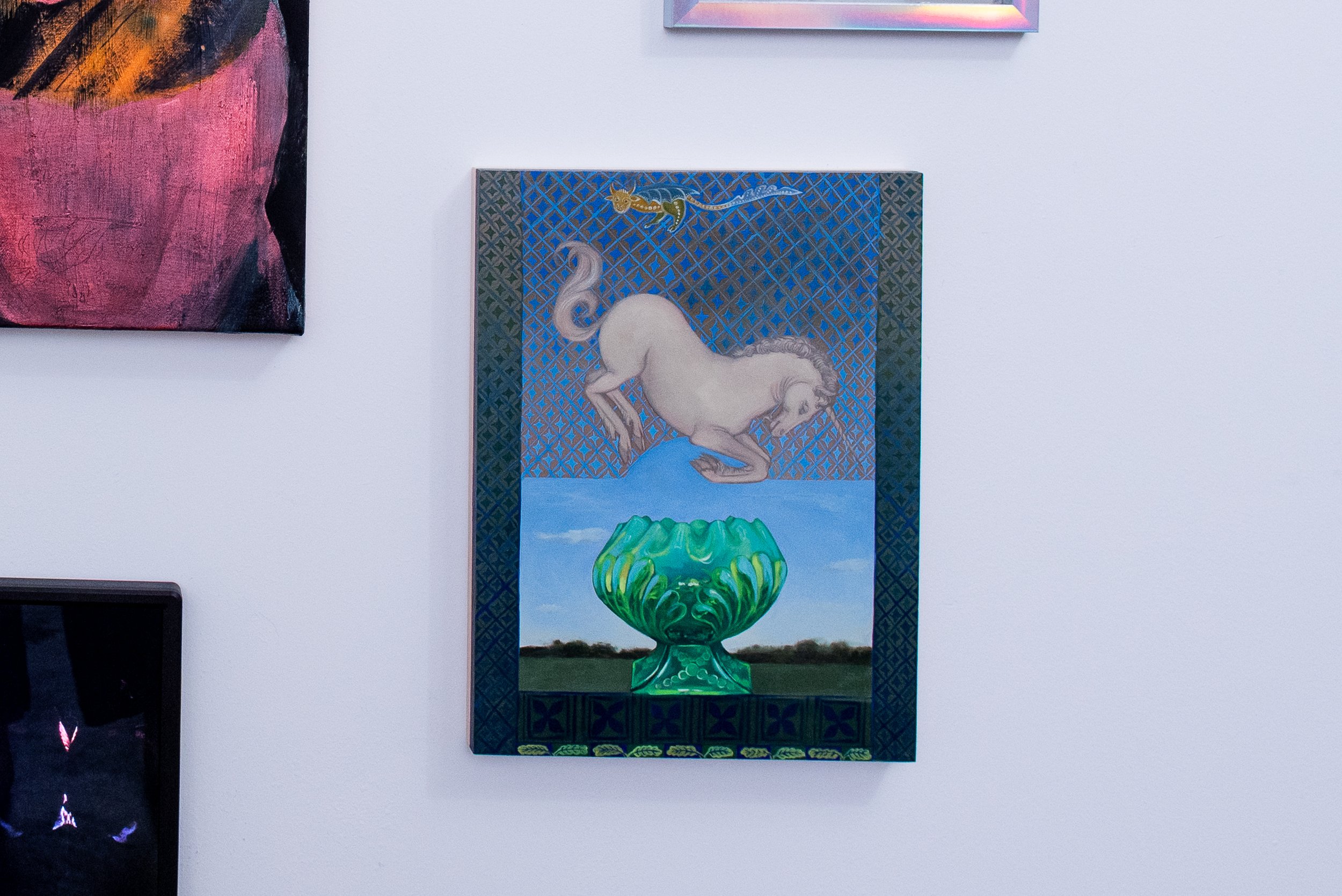
Audrey Bialke (b.1991) paints representational oil paintings that feature historical renderings of animals and fantastical creatures in conversation with everyday objects and the pastoral landscapes of her upbringing. Bialke’s intimate paintings explore the link between magical worlds and mundane realities. She surrounds her scenes with elaborate borders that echo folk art and domestic patterning, bringing intellectual reverence to decoration. Bialke has exhibited with Harsh Collective (Brooklyn), One River School, (Westport, CT) RAINRAIN (New York), Ambar Quijano (Mexico City), Lane Meyer Projects (Denver), Standing Gallery (Long Island City), and SPRING/BREAK Art Show (2022, 2023, 2025). Her work has been featured in The Wall Street Journal, Hyperallergic, New Visionary Magazine, Artnet News, Art Seen Magazine, and Two Coats of Paint. She lives and works in Trumansburg, NY.
Chris Bristow Living in Denver, grew up in Denver, went to school in Brooklyn, NY. Studied Painting, I make art that disregards the photo, and is created from life, and memory. I work full time as a tailor, and last year, taking the advice of a close friend, started applying principles of sewing to create new art, as it became very easy to hand sew new works while watching tv with my boyfriend.
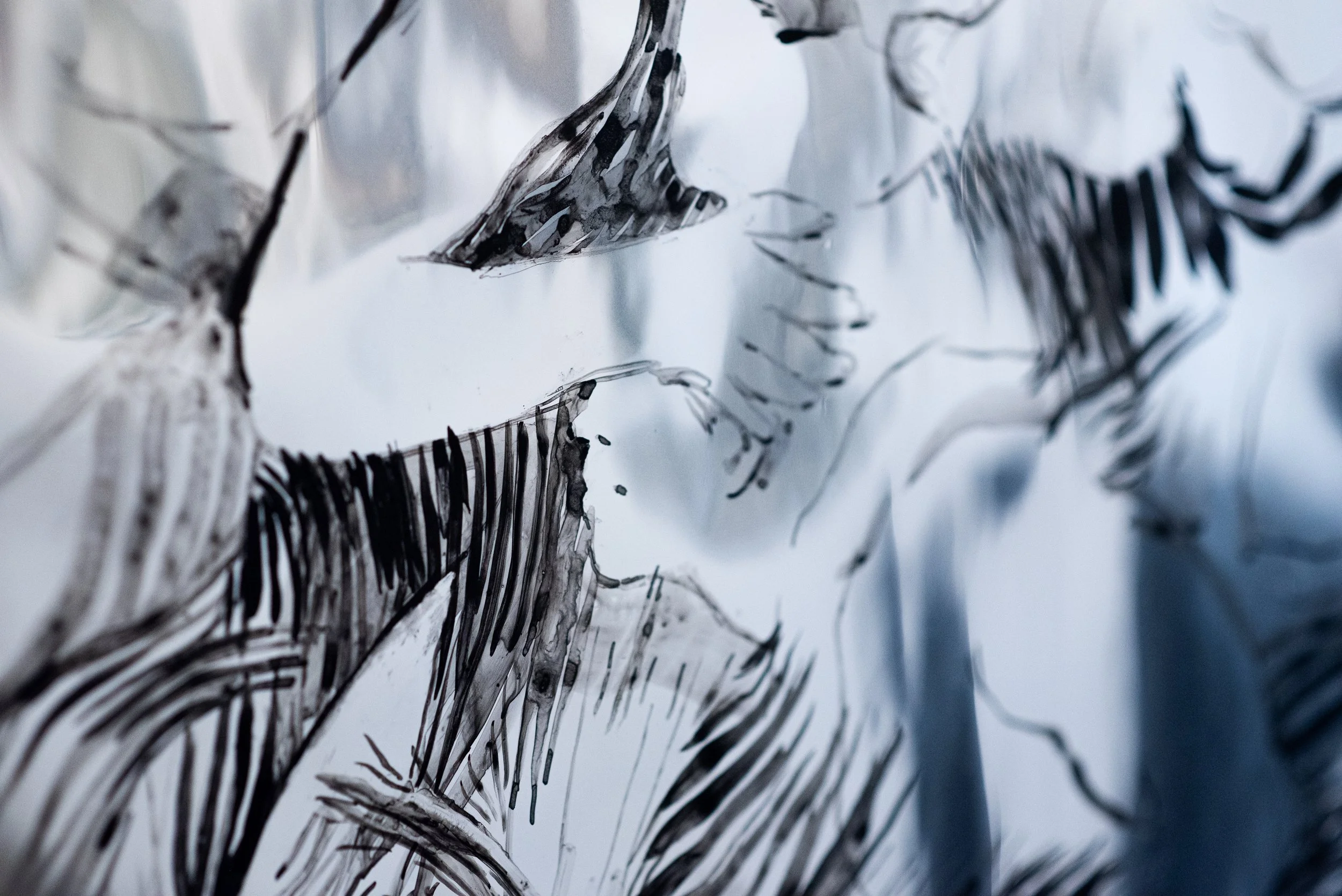
Kate Casanova is an interdisciplinary artist who explores the posthuman through sculpture and video. Casanova has exhibited nationally and internationally at venues such as Yi Gallery (Brooklyn) the Black Cube Nomadic Museum (Denver), and the Weisman Art Museum (Minneapolis). Casanova is represented by Myta Sayo Gallery (Toronto). She received a Master’s of Fine Arts from the University of Minnesota in 2013 and a Bachelor’s of Fine Arts from the Minneapolis College of Art & Design in 2008 and serves as Associate Professor of Sculpture and Director of the School of Art & Art History at the University of Denver.
Canyon Castator (b. 1989, Houston, TX) makes large-scale paintings that satirically address our social reality, bringing together an exuberant blend of figures culled from the internet, modern media, politics and personal experience. Castator’s world is hyperbolic, saturated with dissonant characters, knowing symbolism and distorted narratives. His distinctive aesthetic is not tied down to one language but fuse digital and traditional mediums in a cacophony of psychedelic vibrance.
Castator’s work has been exhibited internationally and is held in private and institutional collections across the United States and Europe. Recent exhibitions include Diane Rosenstein (Los Angeles), The Hole (New York), Carl Kostyál Gallery (London/Stockholm), and Plan X (Rome). His work has been reviewed in Bomb Magazine, Juxtapoz, Artnet, and more. He is represented by Carl Kostyál.
In addition to his studio practice, Castator is the co-founder of Mohilef Studios, an artist-run studio project in Los Angeles. Through Mohilef, he continues to foster community, experimentation, and collaboration within the contemporary art landscape.
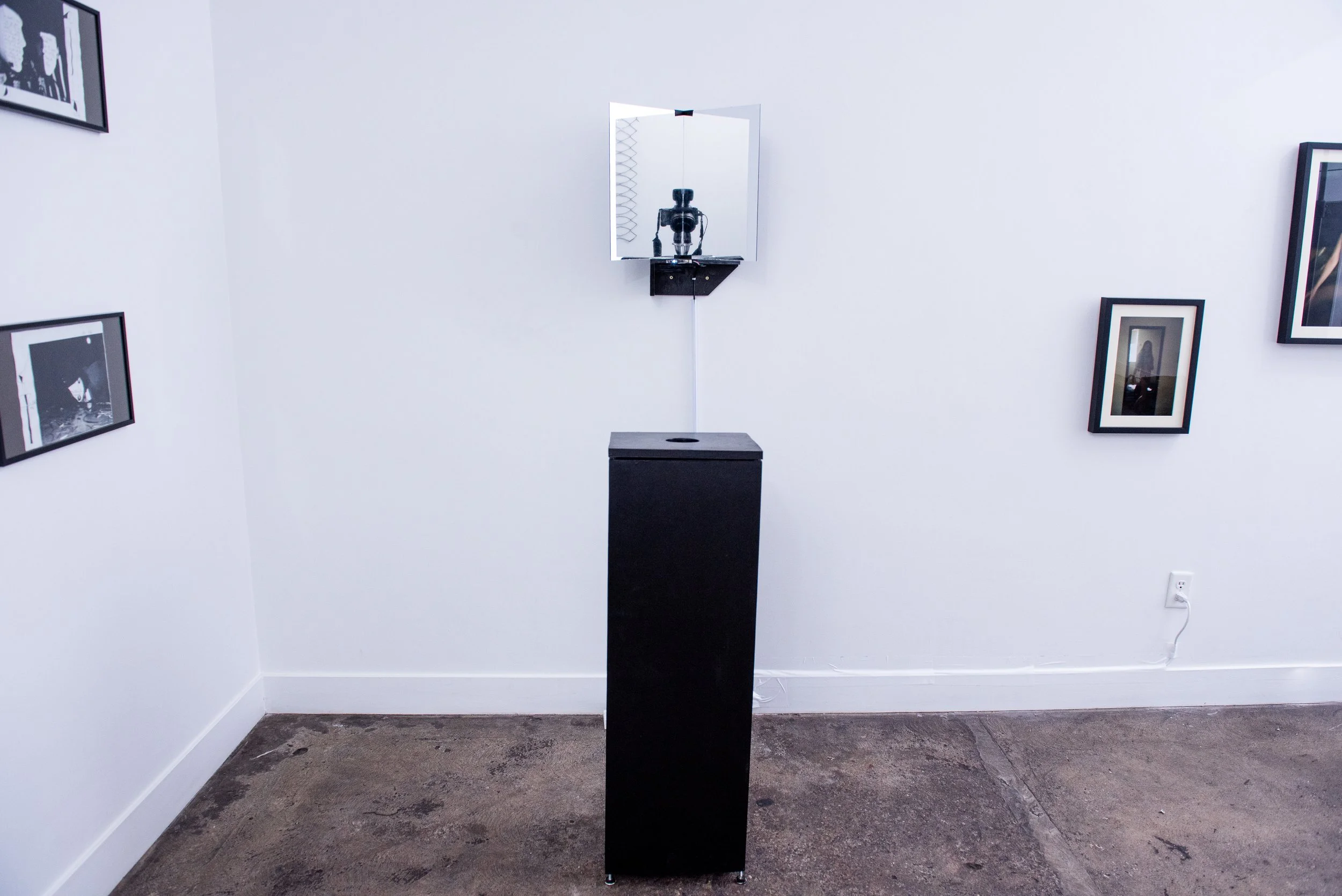
Srikar Hari (b. 1993, India) is a visual artist, currently pursuing his PhD at University of Colorado, Boulder in the Critical Media Practices department. He holds an MFA in Photography from Rhode Island School of Design, USA and a Bachelor’s in Digital Video Production from Srishti School of Art, Design and Technology, Bangalore, India. His current interests combine various image-making devices to explore emotional, psychological and phenomenological effects of image production in the digital age. Creating portals of intervention in the viewers’ perceived reality that urge them to rethink the status of the digital image and our perception of the world mediated by devices. An exploration of the malleability of human perception and the devices’ ability to trigger and affect this plasticity. His work has been exhibited at Microscope Gallery (Manhattan, NY), Serendipity Arts Festival (Goa, India), Jehangir Art Gallery (Mumbai, India), DRIK (Dhaka, Bangladesh) among other venues.
KT Hickman makes paintings and printed works that draw from consumer language, personal obsession, and the emotional charge of words. She had a solo exhibition, Thirst Asks Nothing More, curated by Leo Pitzpatrick was presented by Marlborough gallery’s The Viewing Room in NY, NY. Recent group exhibitions include A.D. (NY, NY), Sangheeut & Shower (Seoul, Korea), and 56 Henry (NY, NY). Hickman lives and works in Brooklyn, NY.
Ray Hwang (b. 1992) is an artist from LA, living and working out of Ridgewood, NY. His work consists primarily of acrylic painting and drawing, in which he abstracts and layers imagery from his personal history to explore themes of family, home and inter-cultural contradiction. He received his BFA from the School of Visual Arts in 2016 and has since exhibited throughout New York City and internationally. He has been featured in Art Maze Magazine, Vast Magazine, and has been a recipient of the Keyholder Residency (Norwich, UK). He has shown with Tube Culture Hall (Milan, Italy), LaiSun Keane Gallery (Boston, MA), 81 Leonard Gallery (NY, NY), and at Spring/Break Art Show (NY, NY). He has had solo exhibitions at Latitude Gallery (NY, NY), Tempest (Ridgewood, NY), Moosey Gallery (Norwich, UK), and is currently a member of the gallery and curatorial collective Below Grand on the Lower East Side in NY.
Lisa Larson-Walker is a multidisciplinary artist who currently lives and works in Brooklyn. She previously attended The Cooper Union School of Art and is currently an art director at ProPublica. The New York Times, Slate, The New Republic, and Mother Tongue Magazine are amongst the groups that she has done work for.
Francesca Lipinsky While primarily a painter and musician, Francesca works with a range of mediums to explore ideas related to nature, gender, and social justice. She lives and works in Denver.
Michael Mahalchick (b. 1972, Pottsville, PA) typically centers around sculpture, collage and performance in his works. Working primarily with found materials his work engages with themes of value, memory, temporality, identity and chance. He currently lives and works in Brooklyn, NY.
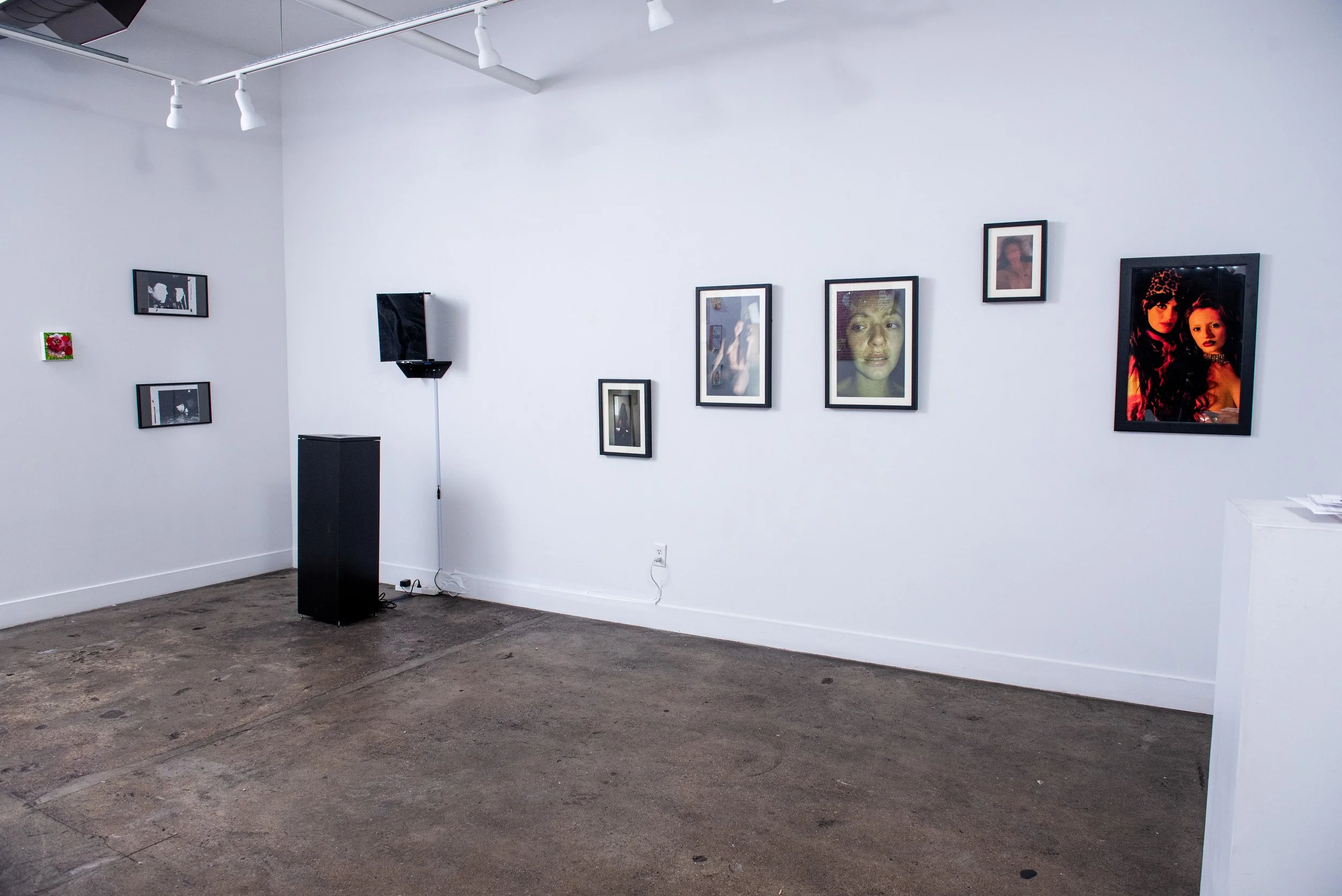
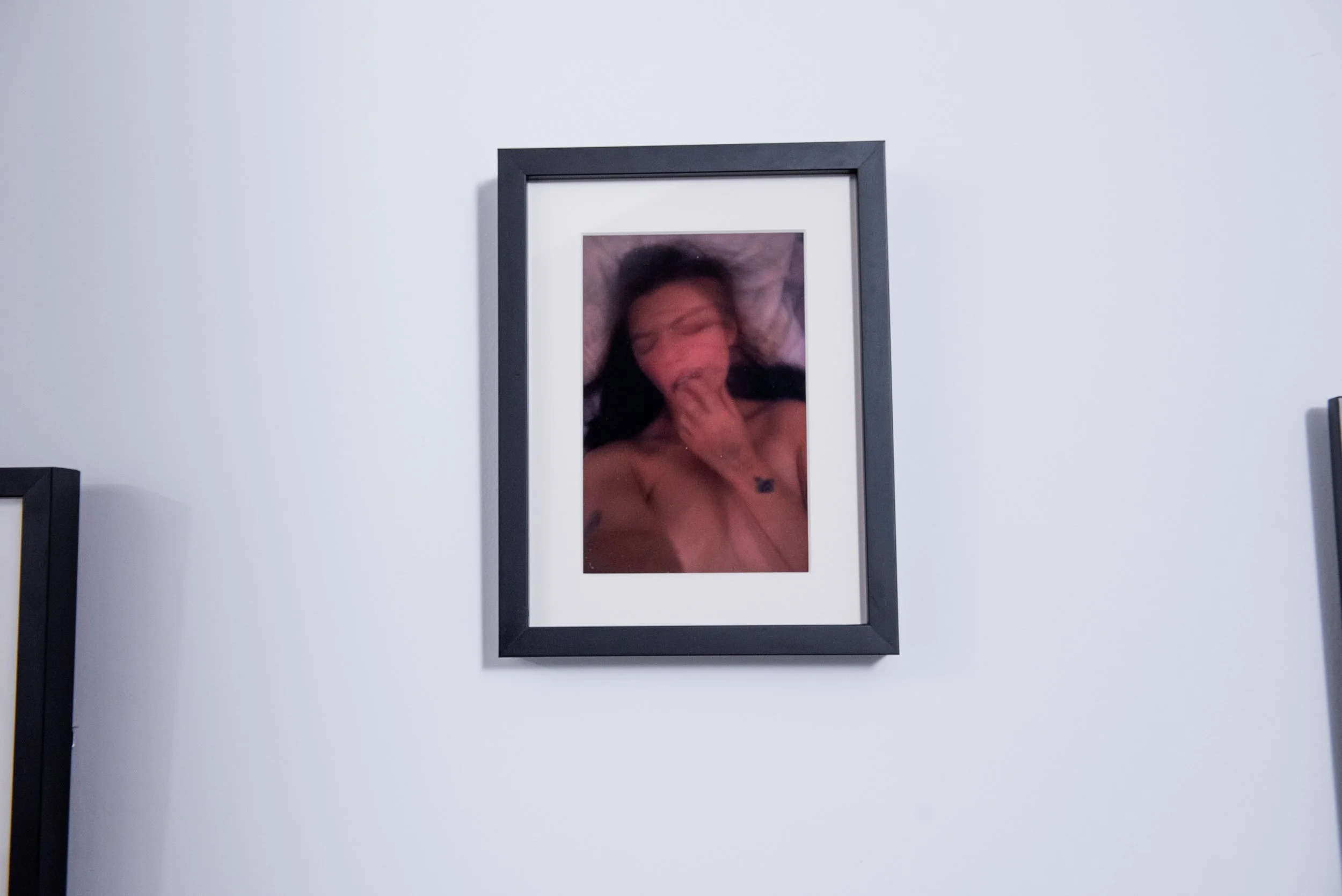
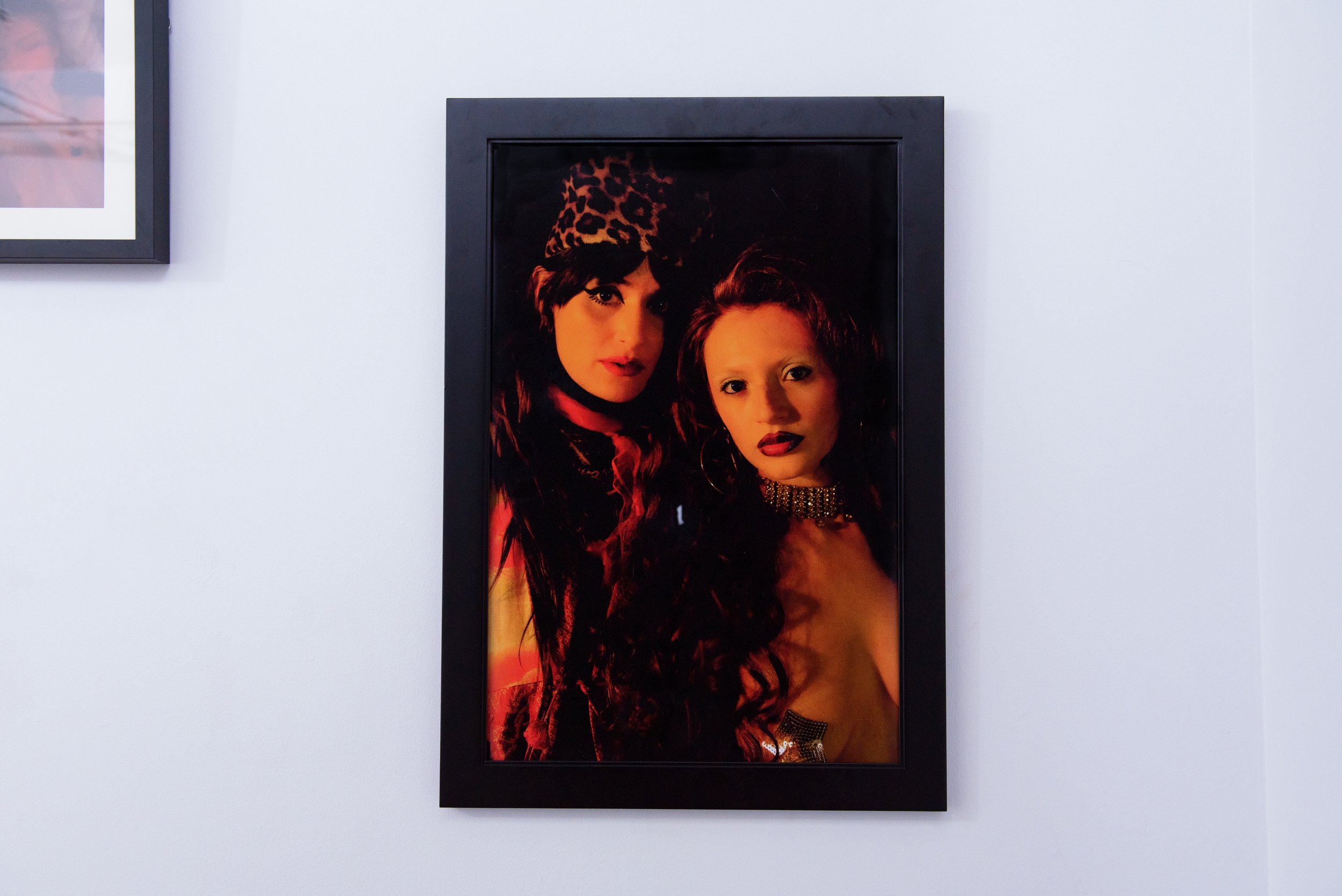
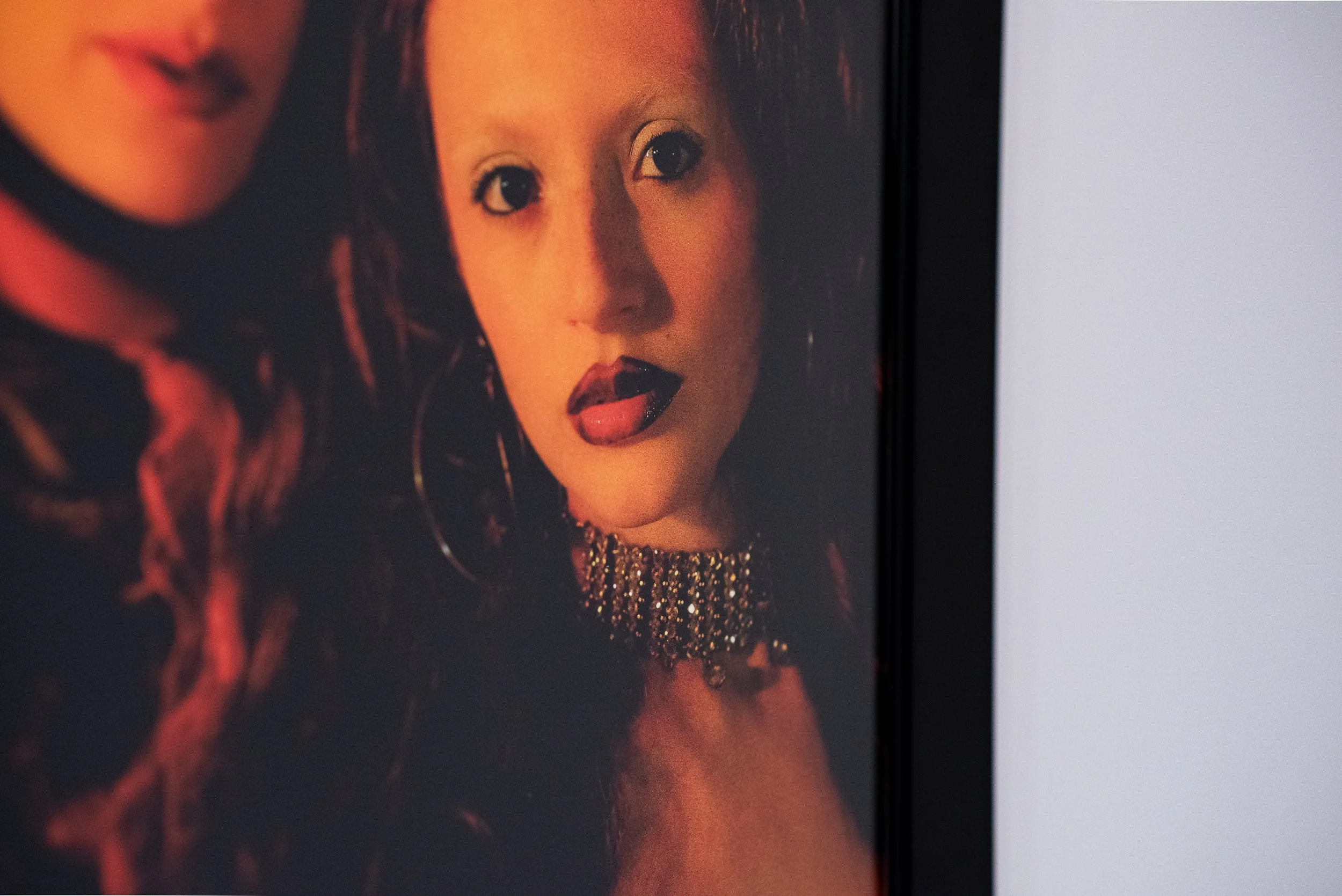
MaryV she/her (b. 1998) is a queer Guatemalan American photographer. Born and raised in Denver, Colorado, MaryV attended Parsons The New School in New York. With a uniquely sensitive approach to her subjects, MaryV focuses on documentary, portraiture, and self-portraiture photography. She explores love, vulnerability, intimacy, self-identity, sexuality, gender, sex, disability, relationships, bodies, and emotions.
Olivia Oyamada (b. 1994) is a Japanese-American painter and sculptor. She is a MFA candidate at the Milton Avery Graduate School of the Arts at Bard College and currently works and resides in Oregon.
Ian Park - I’ve had a lifelong fascination with scary movies because they are a significant part of my southern family’s bonding activities. Growing up, we would rent from multiple video stores around the towns. The visceral feelings helped tie us together with frightful enjoyment and cope with small town blue collar lives in rural Arkansas. I also discovered recorded VHS tapes in my grandparent’s wooden movie case, especially one I wasn’t supposed to watch, but secretly did, I Spit on Your Grave (1978). My love for horror grew stronger as I aged with discoveries of queer ideas and theories seen deeper than the screen. Such formative examples included May (2003), Sleepaway Camp (1983), and Basket Case (1982).
My art is based on concepts of queer nostalgia, horror, class, camp, and humor, with an emphasis on influences from films. I am always creating challenges for projects in which I combine these subjects to weave my identity, interests, and upbringing together.
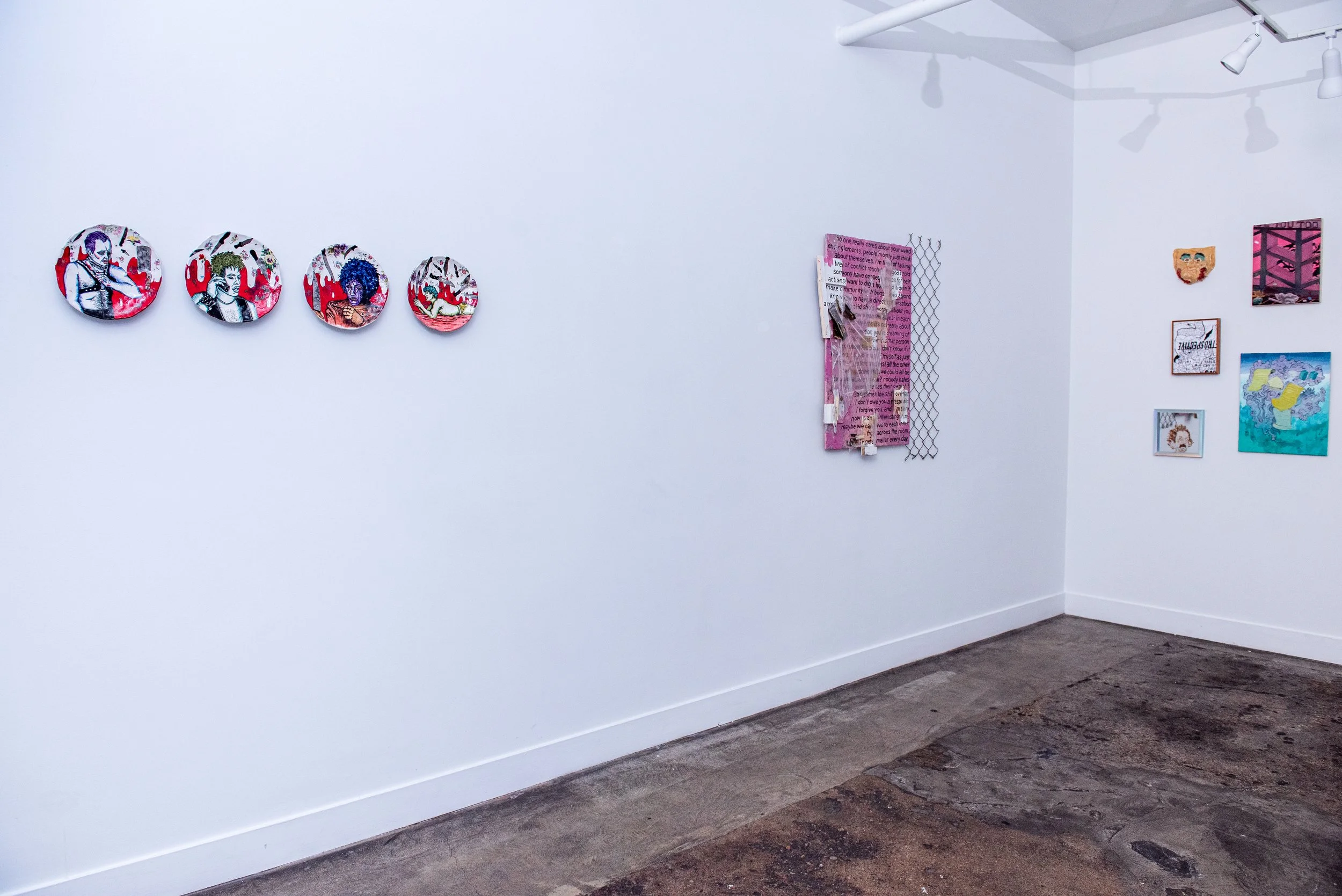
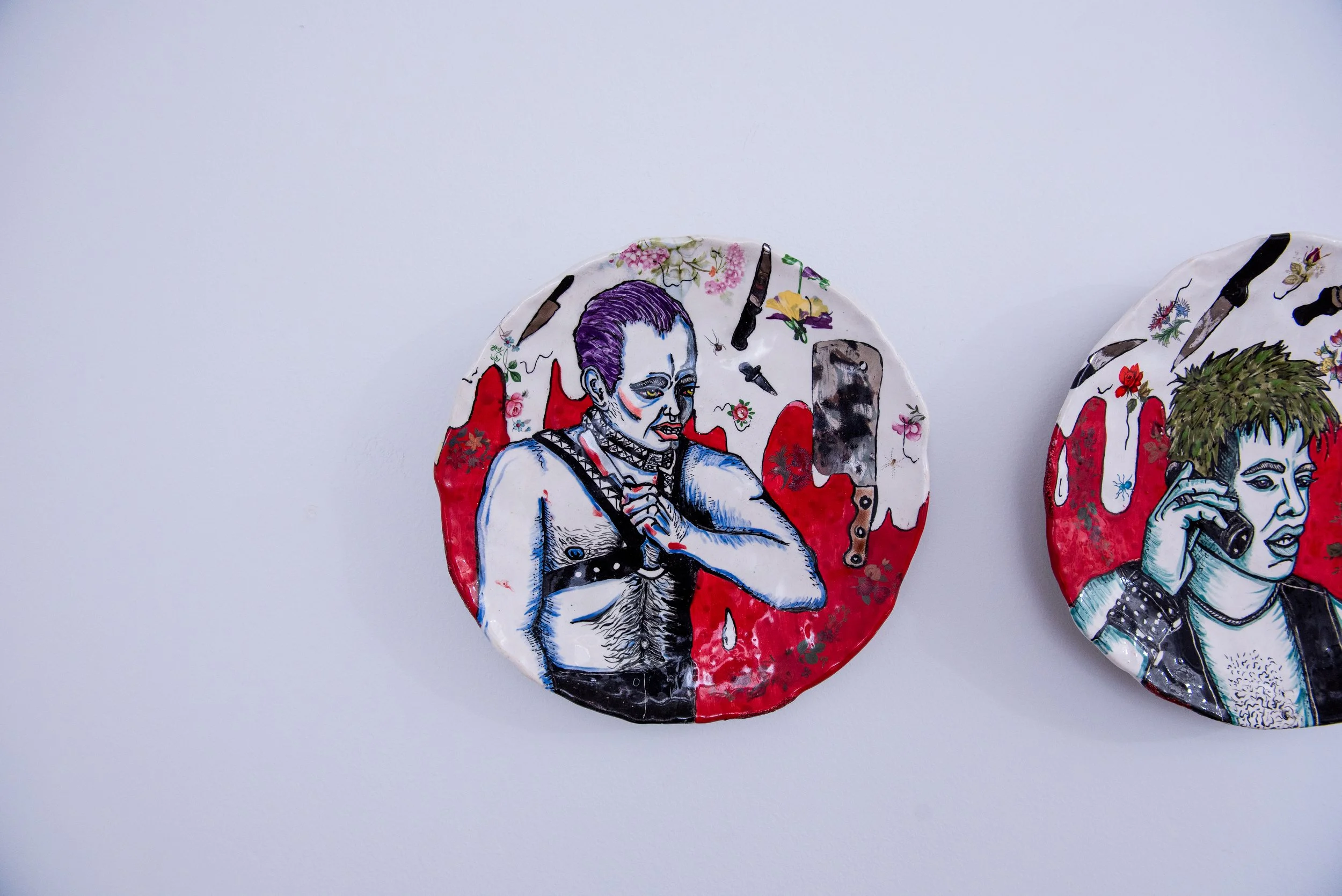
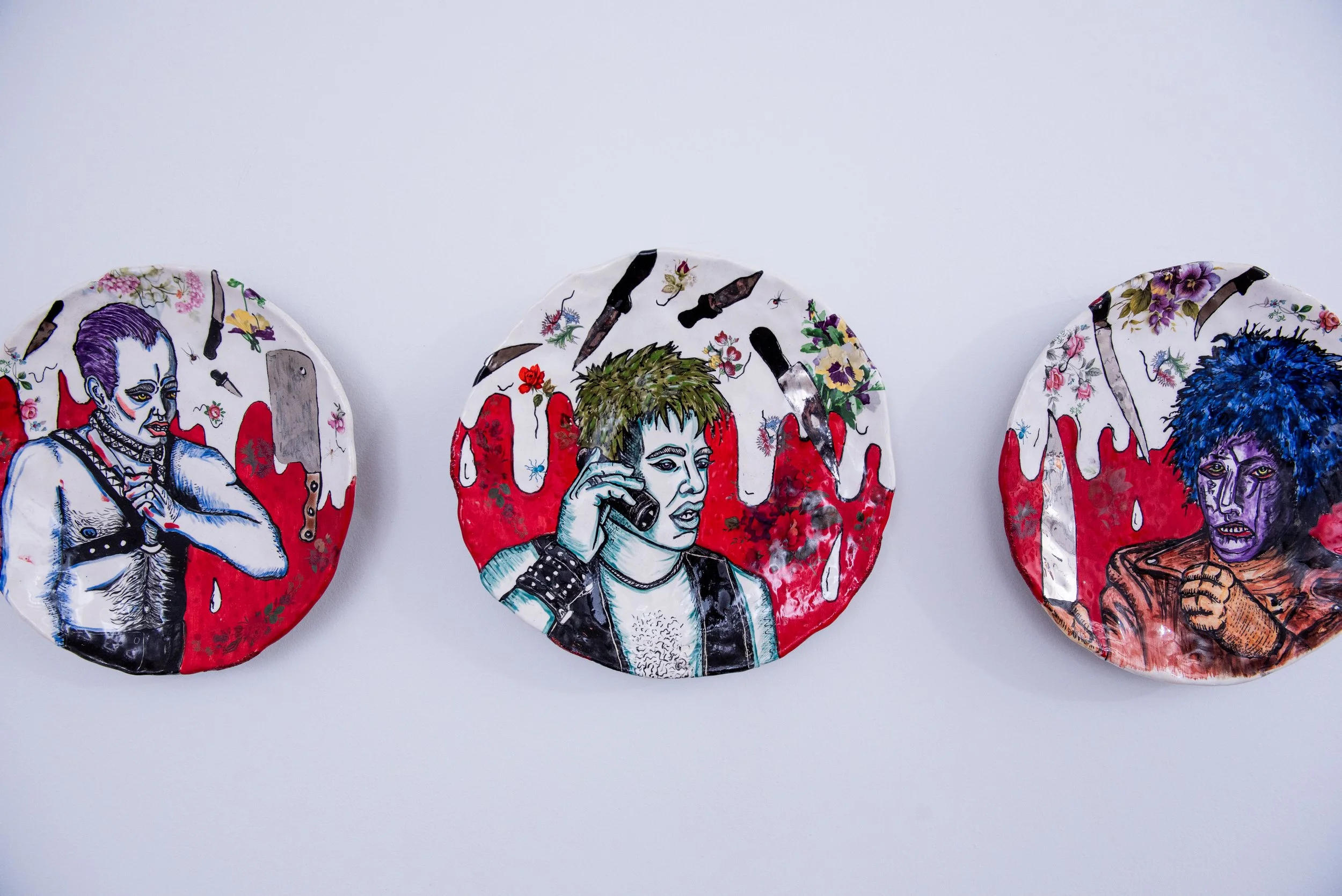
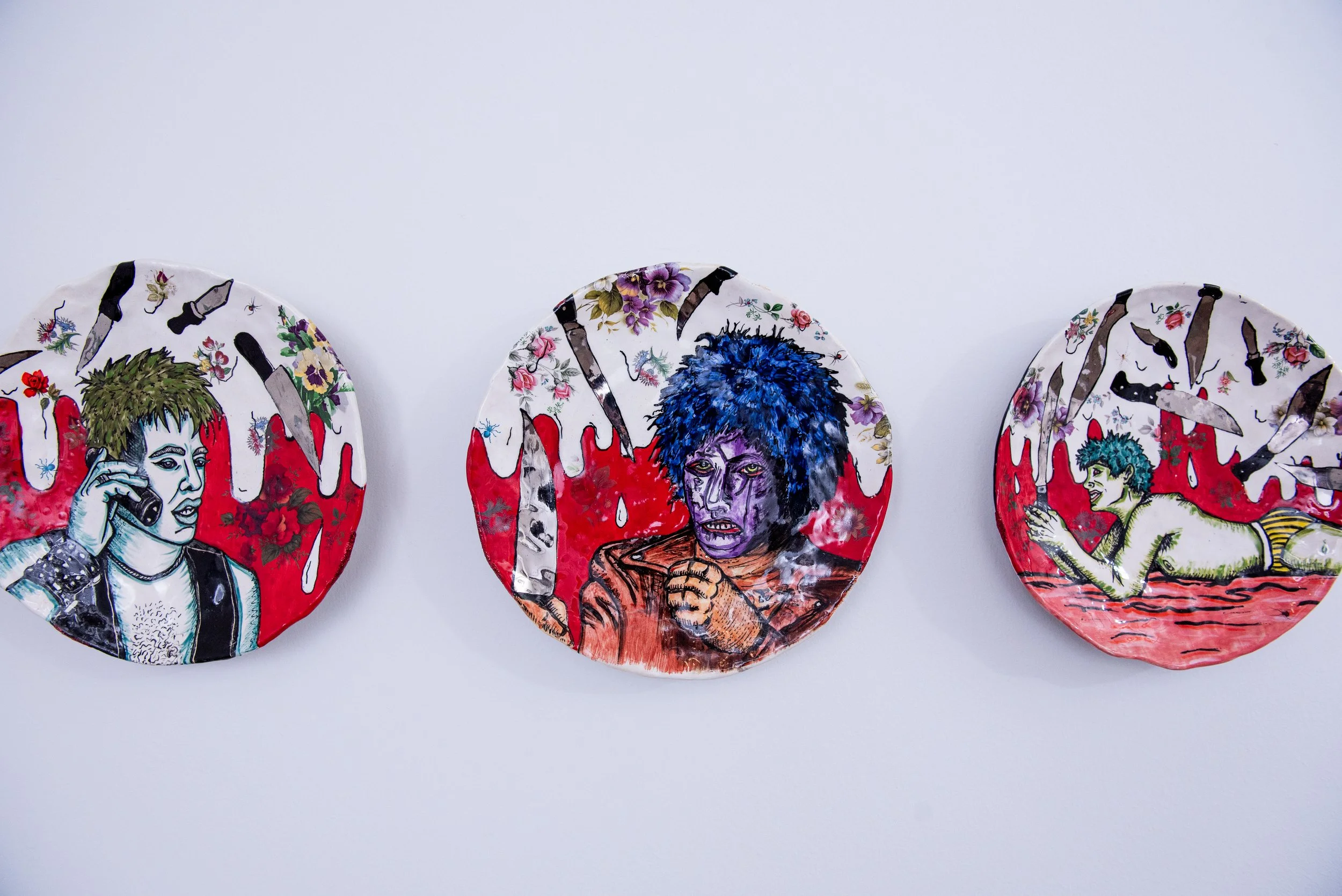
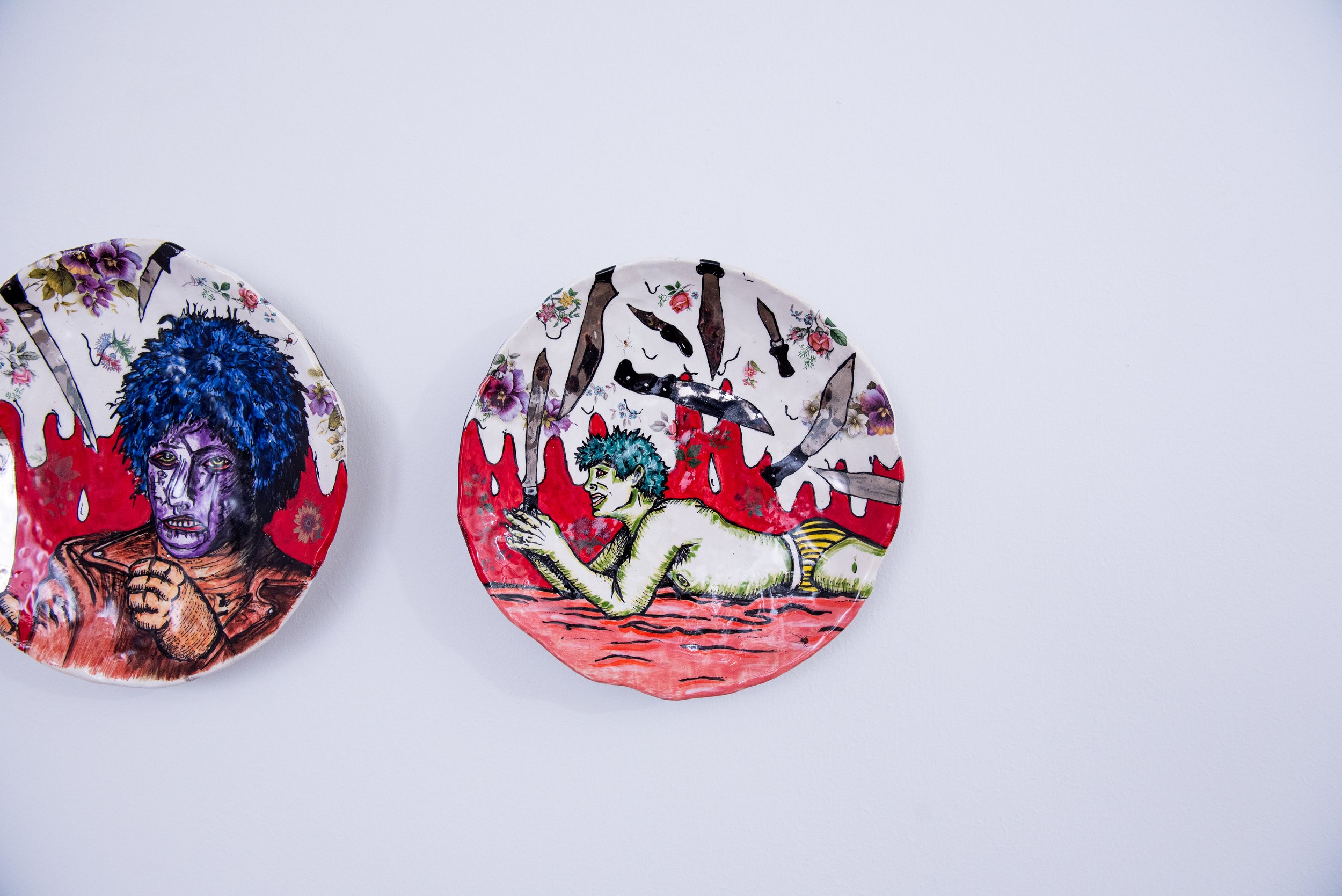
As for my current work, Serial Sissies, these plates focus on my colorful rendition of narcissistic fictional queer serial killers within horror/thriller cinema. Narcissism itself can be quite horrifying, but it also has different contexts within communities and cultures. I chose to focus on four films with queer serial killers who have a multitude of vain reasons for their homicidal acts. In Our Paradise (2011), Vassili goes on an angry sex working murder spree because youth is escaping him while his vanity morphs into a vicious monster. From Knife+Heart (2018), we see a character who cannot cope with past or current trauma from hate crime and pursues revenge on beautiful gay porn stars. Death on the Beach (1991) tells an egotistical closeted queer story through intertwined extreme manipulation, suppression, and oppression. Whereas, Hide and Go Shriek (1988) leads the viewer on a dark, yet confusing, death path of a love sick self-absorbed delusional blundering murderer. Each of these films' themes touch on gay egomania in some form or fashion, not to be praised or celebrated, but to be observed and studied. Throughout each plate, knives are present, as an allegory for the harm a penis or toxic masculinity can cause. I have artistically paused the films, so that the viewer can take a moment to look at the characters, since the characters have spent plenty of time staring at themselves
Corey Presha (b.1985) is a self taught painter and artist living and working in Haverstraw, New York. He also curates the project space Lobby, located in Made Hotel in NYC.
Cyrena Rosati is an artist and musician based in Denver, Colorado. She is a co-founder and co-director of the DIY project space, Squirm Gallery. Her visual work, be is sculpture or assemblage, photography or collage, is concerned with the emotional relationships between person and environment, constructed or natural, and the transformations each go through as a result of the other. This is explored through her use of construction materials and process-heavy methods of making. Rosati received her BFA in sculpture from MSU Denver, and has presented work at numerous art spaces in Colorado.
Aaron Storck (b. New York City, 1978) currently lives and works in Lawrence, KS/Kansas City, MO. He received his MFA from Virginia Commonwealth University in 2014. His work has been included in exhibitions at SFAI’s Walter and McBean Galleries, The Pennsylvania Academy of Fine Art, and the Bemis Center for Contemporary Art. Mr. Storck has participated in several Residencies including those at Kansas City's Charlotte Street Foundation and Wassaic Project, NY. Mr. Storck enjoys exhibiting works with Haw Contemporary in Kansas City, as well as with various artist-run and project spaces from New York City to Denver.
RJ Supa is an artist, curator and write whose work has been presented at Marinaro Gallery; Salon 94; M&B Los Angeles; Jack Hanley Gallery; NADA House; the Kunsthalle Baden-Baden; and the Steirischer Herbst festival in Graz. He is the author of the novels I Am Trying To Break Your Heart and Earl.
Magnus Vogel is a multimedia artist based in Brooklyn, NY. His practice is concerned with language, identity, consciousness, humanity & the cosmos. Magnus works with poetry, photography, sound, performance, painting, drawing, and sculpture. In Magnus’s work, the photographs are taken by Ava Allan. Allan is a live music photographer and graphic designer. Allan was born, raised and is living in the East Village, NYC.
Curatorial Statements:
Kiah Butcher:
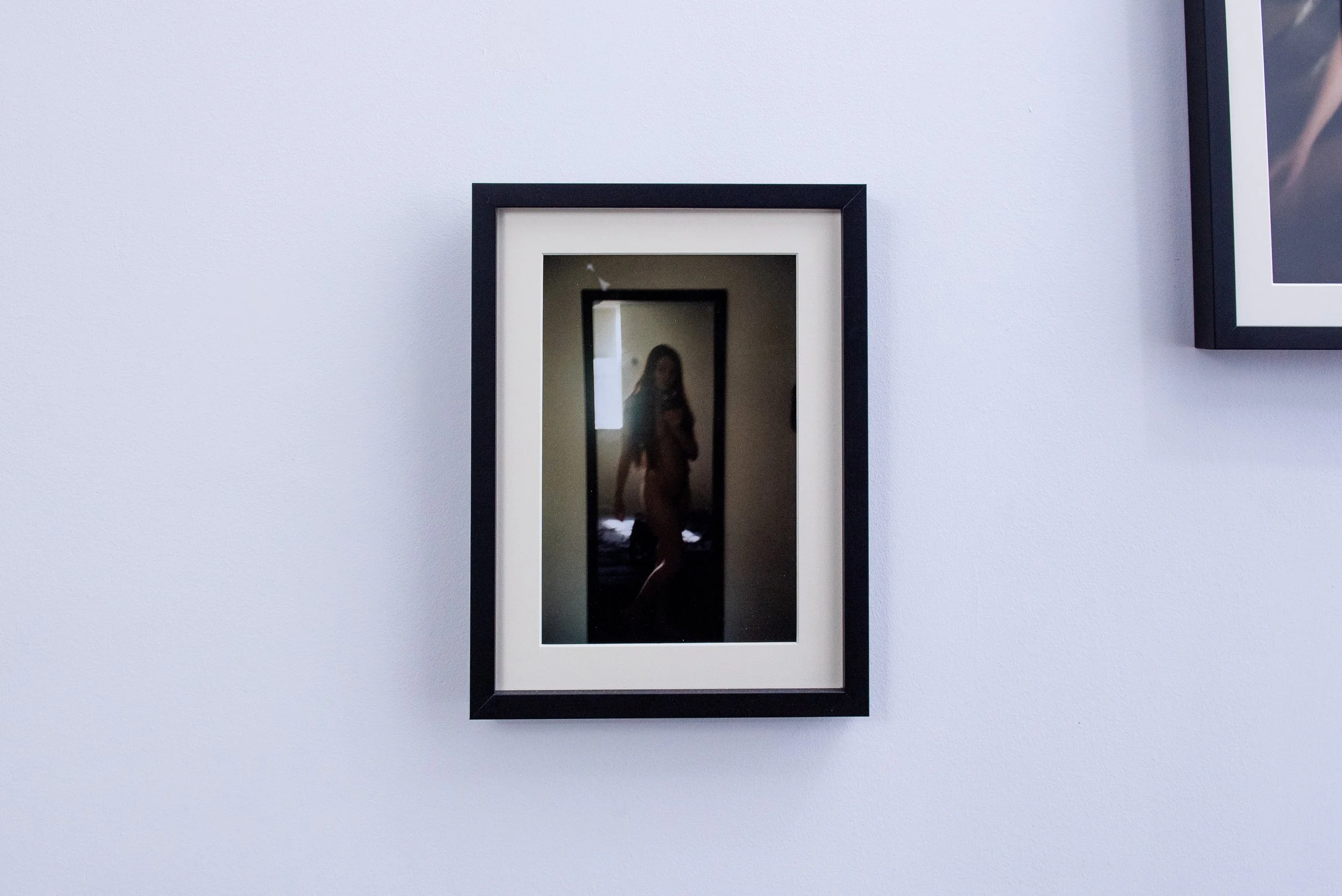
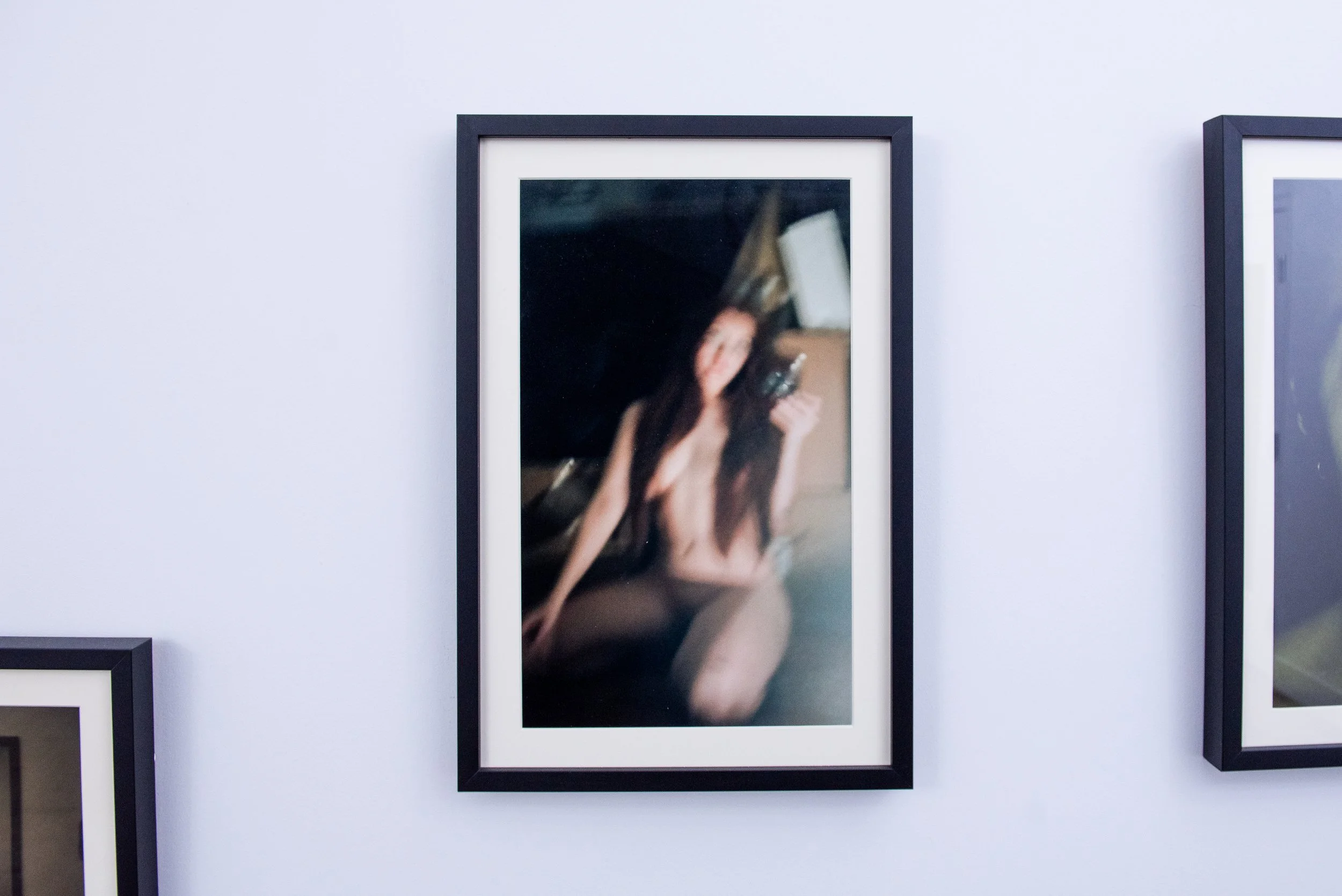
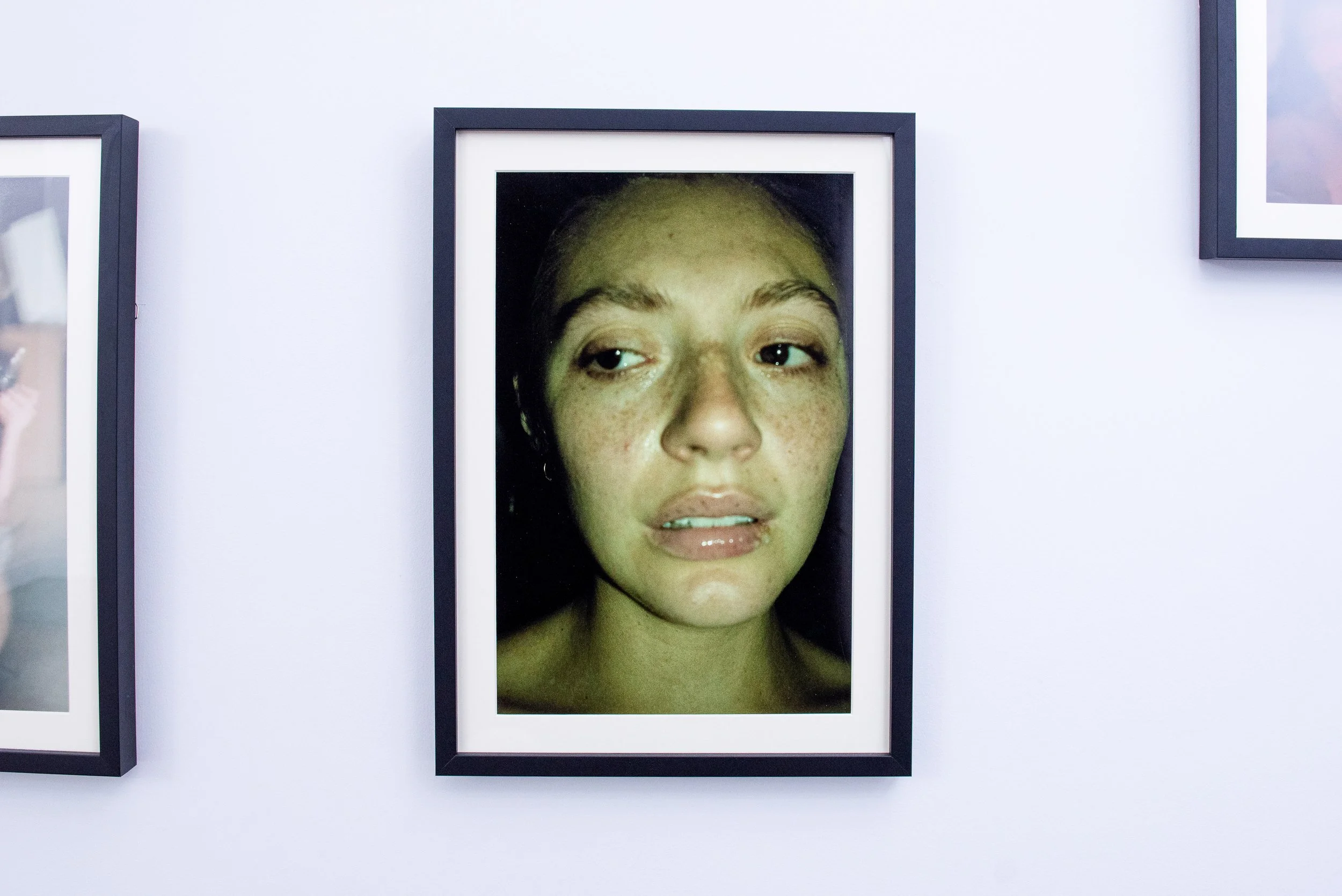
In a cultural time saturated with self-documentation, the act of examining and recording the self is frequently dismissed as narcissistic—a symptom of ego rather than an intimate gesture of vulnerability. These images present the courage of attempting to know oneself at all. Reframing the self portrait as not an indulgent declaration of self, but rather an invitation for the viewer to explore their own presentation of identity through exposure.
Jenny Nagashima:
Hindsite
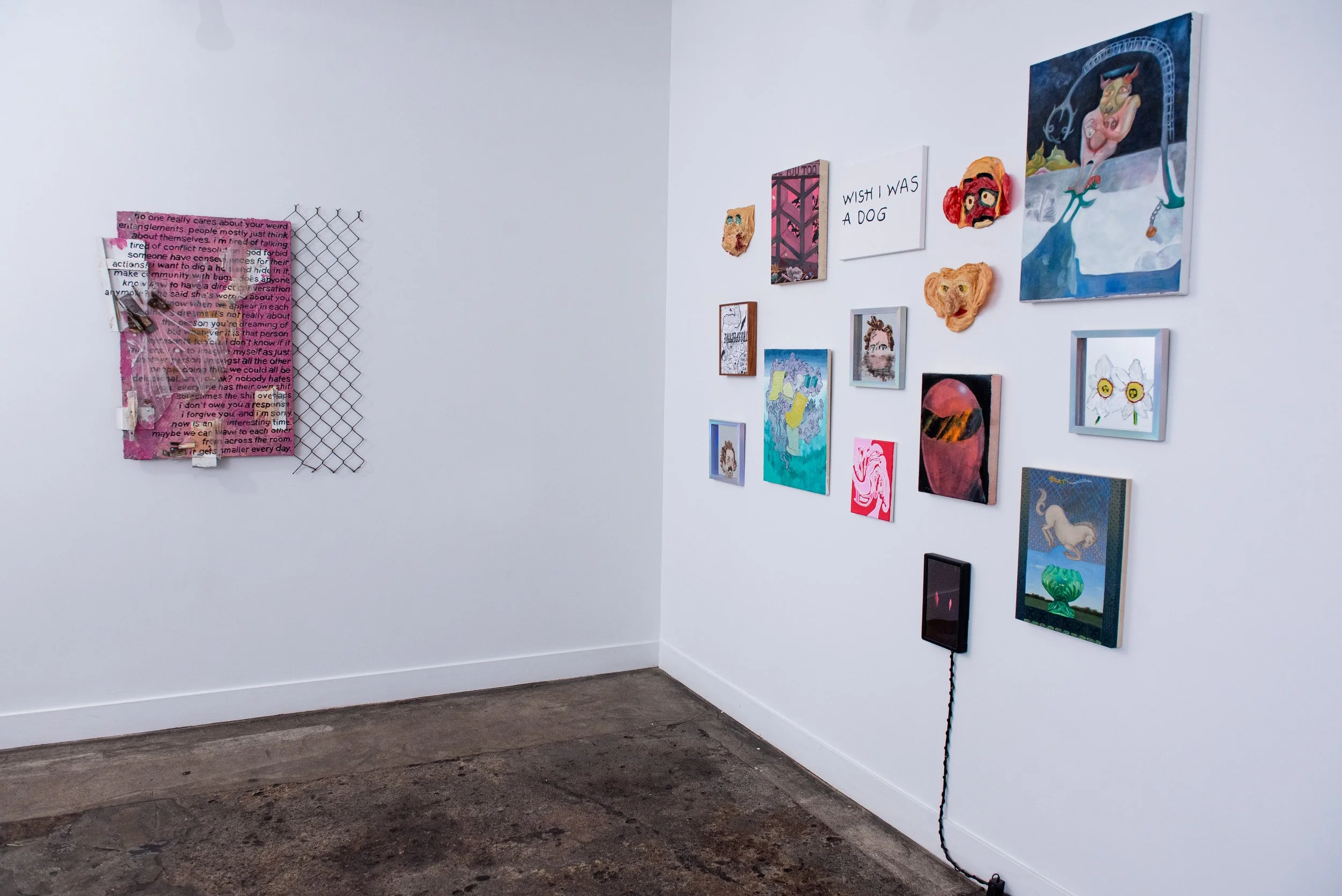
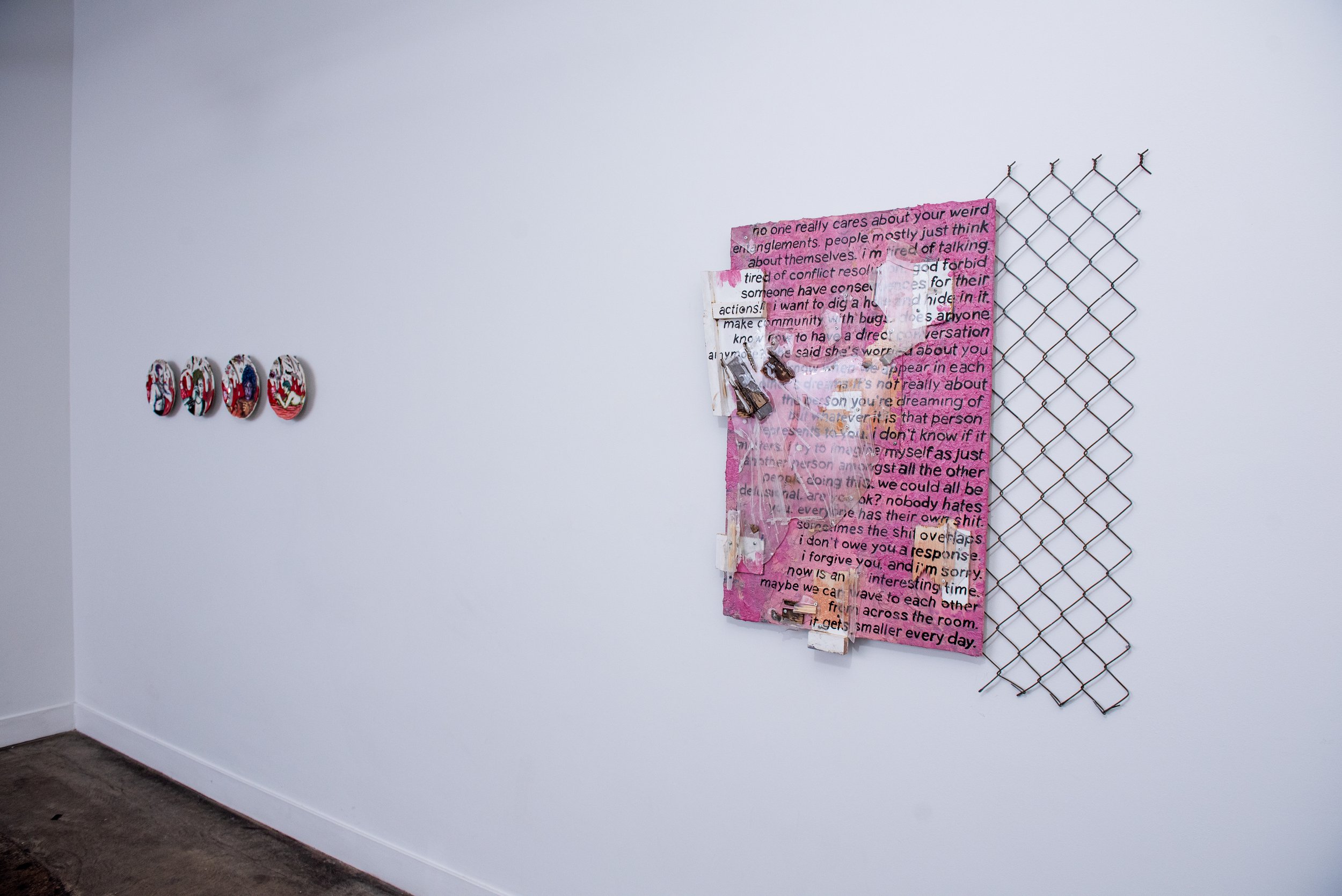
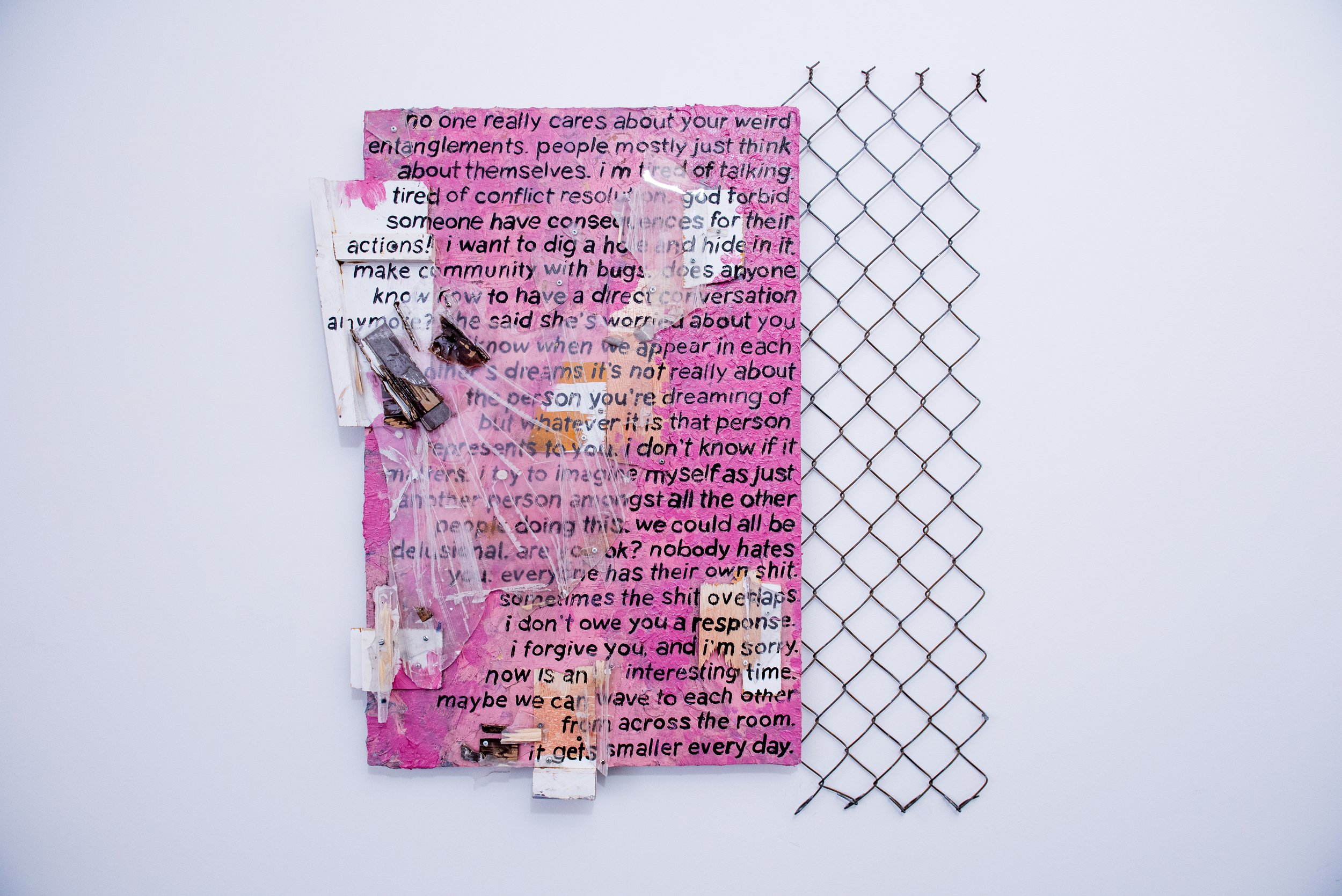
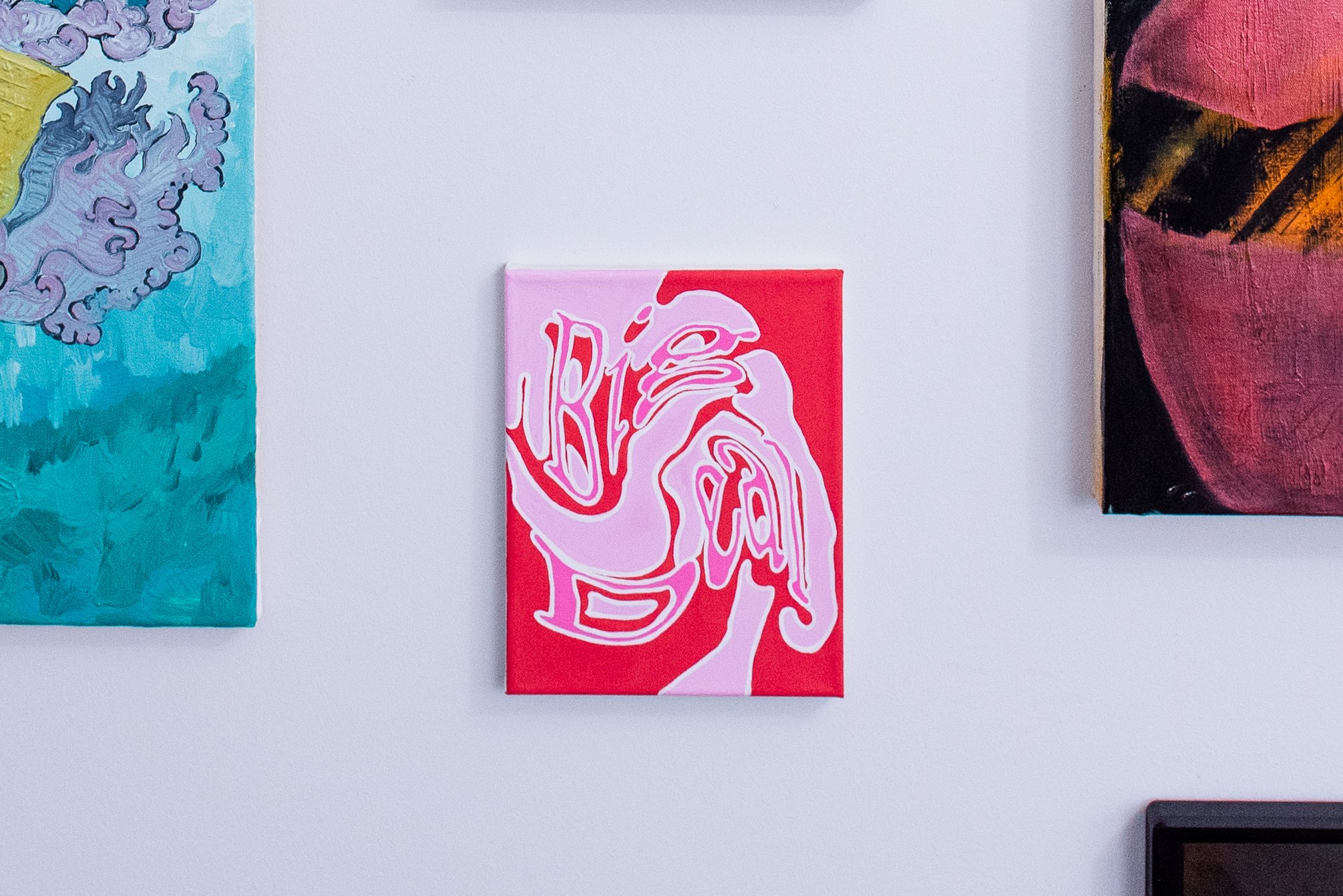
Cyrena Rosati examines how narcissism functions as a cultural force that shapes the way Asian women are seen, consumed, and represented in Western art. At its core Cyrena’s work interrogates the mechanisms that drive fantasies, projections, and inherited colonial frameworks that continue to influence intimate relationships, artistic dynamics, and the formation of the “muse.”
Cultural Context: Narcissism and the Colonial Legacy
Orientalism provides the historical foundation for the narcissistic dynamics experienced by Asian women in the US. As Bitna Kim writes, “Orientalism is not from the Orient, but from the Occident… for the Occident to define the Orient and situate the West as a superior culture to the East.” Rather than observing Asian culture, Western thinkers—Balfour, Napoleon, Kissinger, Dante, Chaucer, Byron, Shakespeare—projected an imagined East, one built from false assumptions designed to elevate Western identity. The long history of Western grandiosity forms the backdrop of what psychologists and cultural theorists later called cultural narcissism, a collective habit of centering Western values, desires, and fantasies as universal. American psychologist Christopher Lasch described the rise of narcissism in the American 1970s, characterized by grandiosity, entitlement, and the prioritization of the individual over the collective. These traits, normalized in Western society, stand in stark contrast to many Asian cultural values that emphasize interdependence, familial harmony, and the idea that individuals are shaped by community.
Asian Fetishization: Narcissistic Projection
Within this context, Asian women become particularly susceptible to narcissistic projections. Prasso’s conversations with Mineko Iwasaki reveal how the West continues to misinterpret even highly codified cultural roles such as the geisha, reducing skilled artists to sexualized fantasies. These false notions,
cultivated through literature, mass media, and colonial education, produce what Kim calls “the sexual fantasy and fetish about the East.” The fetishization of Asian women blurs the line between desire and narcissistic projection. Many Western men enter interactions with pre-existing fantasies of the Asian woman as submissive, pliant, and self-effacing. In a narcissistic framework, this imagined docility becomes useful. As Cyrena notes, “They’re also stripping us of full humanity… using [us] to [construct this image] for them.” Orientalism (defined by Bitna Kim) relates to the dynamic that underlies the traditional artist–muse relationship, where the muse, often a young Asian woman, is aestheticized, objectified, and folded into the older male artist’s self-mythology.
Cultural Narcissism
Statistically, narcissism scores are higher among men than women, and significantly higher among individuals shaped by Western individualist values. Asian women consistently score lower on measures of narcissism, where values of harmony, interdependence, and relational thinking are culturally emphasized. However, when placed in a society that valorizes the core indicators of narcissism, community-centric values are often weaponized against the women who hold them. The mismatch between Asian cultural values and Western cultural narcissism creates a fertile ground for fetishization in a space in which fantasies often overwrite personhood.
Disruption: Hindsight
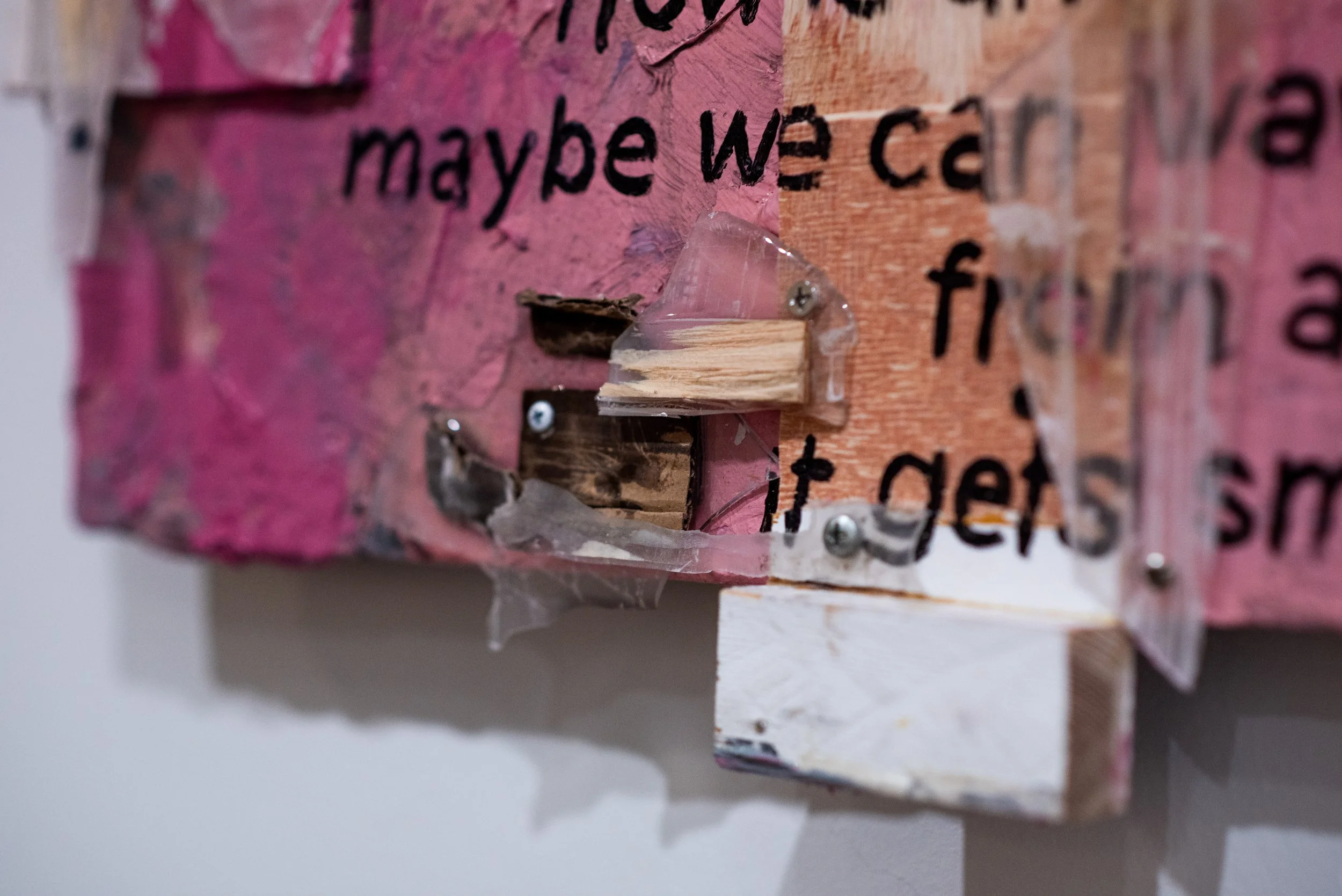
Cyrena’s practice directly confronts and disrupts these inherited perceptions. Her work uses familiar pink tones and fragments of previous pieces to expose the pressures placed on Asian women to appear agreeable, and docile. She writes that this pinkness symbolizes “the perfect pleasantness.” Rather than twisting herself to fit into a predefined role, she “fucks it up,” revealing the messy, complex, and deeply human textures underneath.
Her text-based works operate to subvert the expressions of cultural narcissism. In Hindsite, she expands the narrative: “sharing space & being in community with people I have complicated histories with… putting into perspective how these little dramas shape up against the bigger shit going down in the world. Forgiving and learning how to be good to each other.” In this shift, Cyrena resists both the narcissistic emphasis on the individual and the racist patriarchal demand that Asian women silently maintain harmony. She creates a space where community is still central, but without sacrificing selfhood to maintain someone else’s projected fantasy.
Cyrena’s work breaks the cycle. It refuses the fantasies placed upon Asian women, exposes the mechanisms of narcissistic projection, and reclaims community not as an encumbrance but as a site of mutual accountability and remedial growth. Hindsite asks viewers to consider not only how cultural narcissism operates within the arts, but how it shapes the ways we see, and often fail to see one another.
Brooke Tomiello:
Mulling over what my final exhibition as curator at Lane Meyer Projects was going to be, I narrowed it down to a few central desires. I wanted the exhibition to reflect my love for collaboration and to serve as a celebration of curators, while retaining an element of unseriousness that speaks to the alternative nature of how Lane Meyer Projects exists, all wrapped in a tongue-in-cheek bow. I structured the exhibition to be curated by six curators rather than presented as a singular collective. This framework allowed each curator to have enough freedom to present what they believe best engages the theme of “narcissism” and/or “narcissism in the arts”.
Further reflection on my nearly nine years with the gallery, I found myself returning to artists with whom I have worked with. This inevitably brought the relationship between narcissism and nepotism to the forefront. I knew these artists might have had artwork that would fit the concept, but more importantly, I knew they could get behind the joke.
To come full circle in this way is to meet myself where I started…staring into the shiny puddle of what I’ll leave behind. Ultimately, this exhibition becomes an exercise in reflection: on the people I’ve met or worked with over the years, how a curator/art lover develops an archival memory for individuals and their talents; on what has changed and what remains; on patterns and values that bubble up; on the mechanisms that enable me to support artists; this list is inexhaustive.
Thank you all for joining me throughout my time at Lane Meyer Projects and for ending with staring into that shiny puddle with me.
Sharifa Lafon:
On the exhibition broadly:
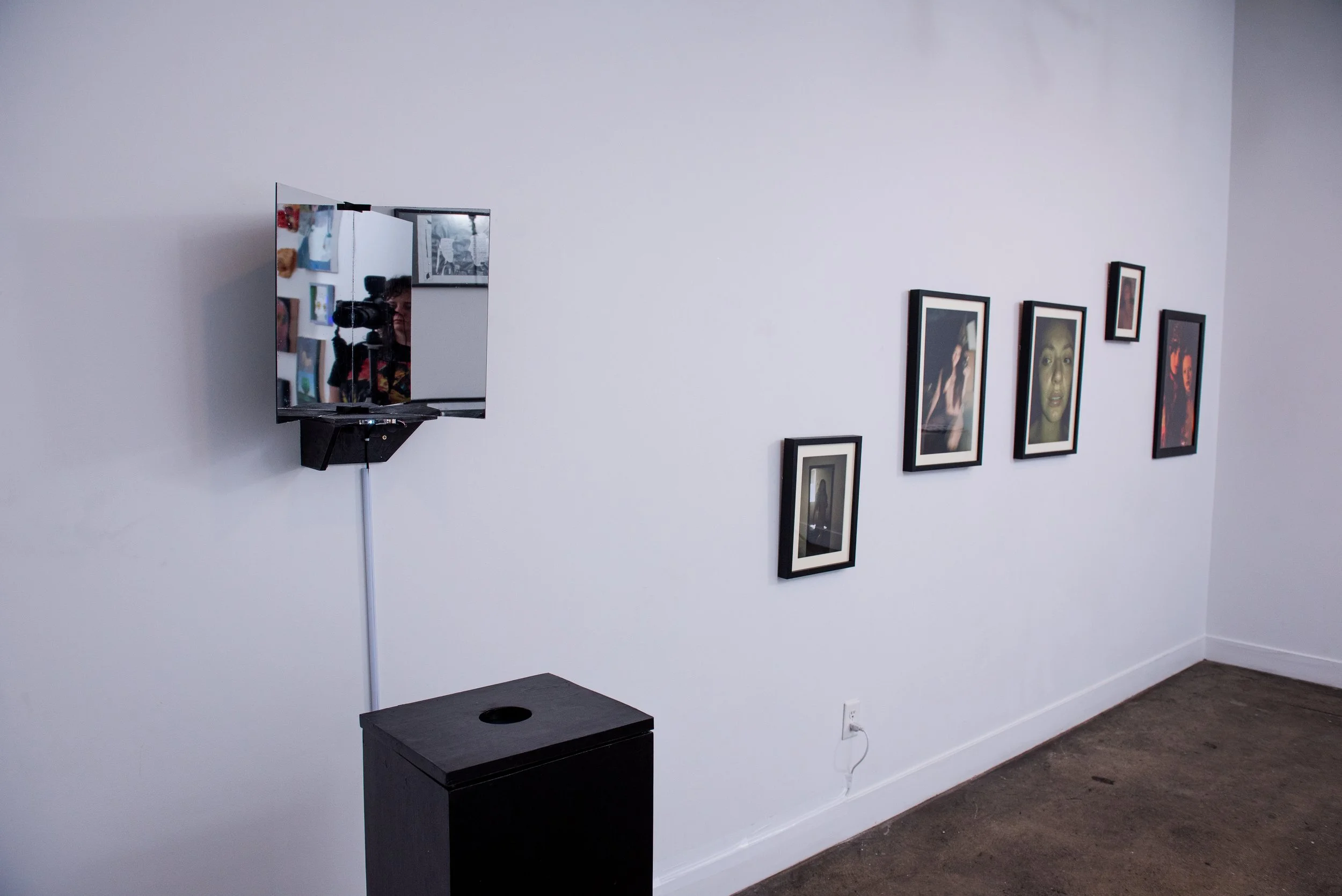
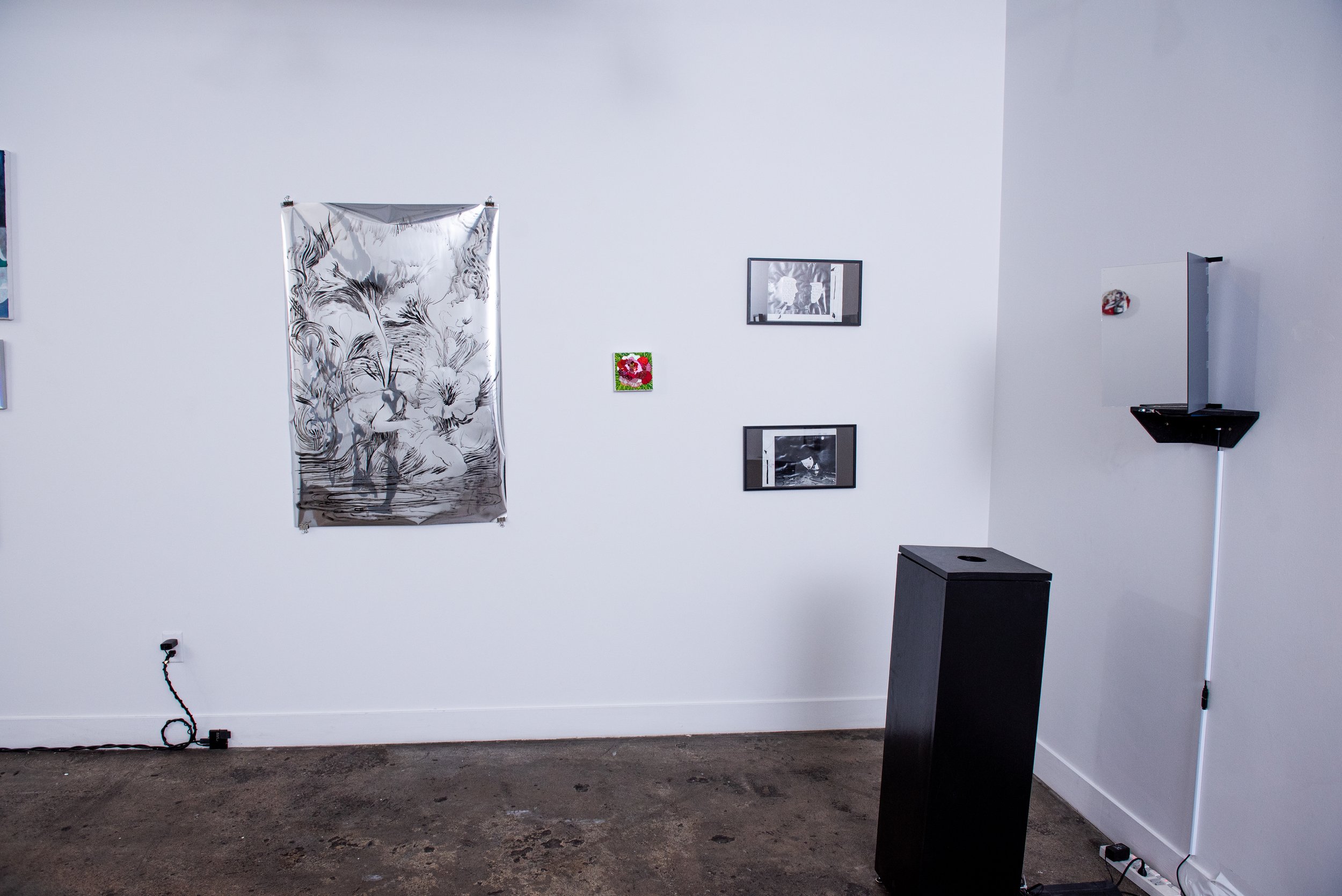
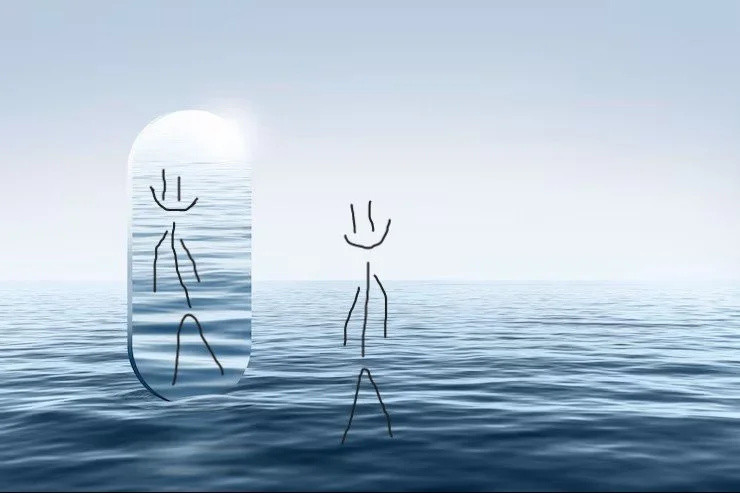
In 1976, Rosalind Krauss described video as a medium of narcissism, a closed circuit in which artist and electronic double fold into one another, severed from history and the world. This feedback loop has now spilled into the everyday, where users continually stage and replay themselves across platforms, measuring existence through the circulation of images. What remains of our reflection when everyone is performing for the mirror? Rather than flattering the self, these works expose perception as contingent, as susceptible to manipulation by devices that script where and how we look.
On the selected artwork by Srikar Hari:
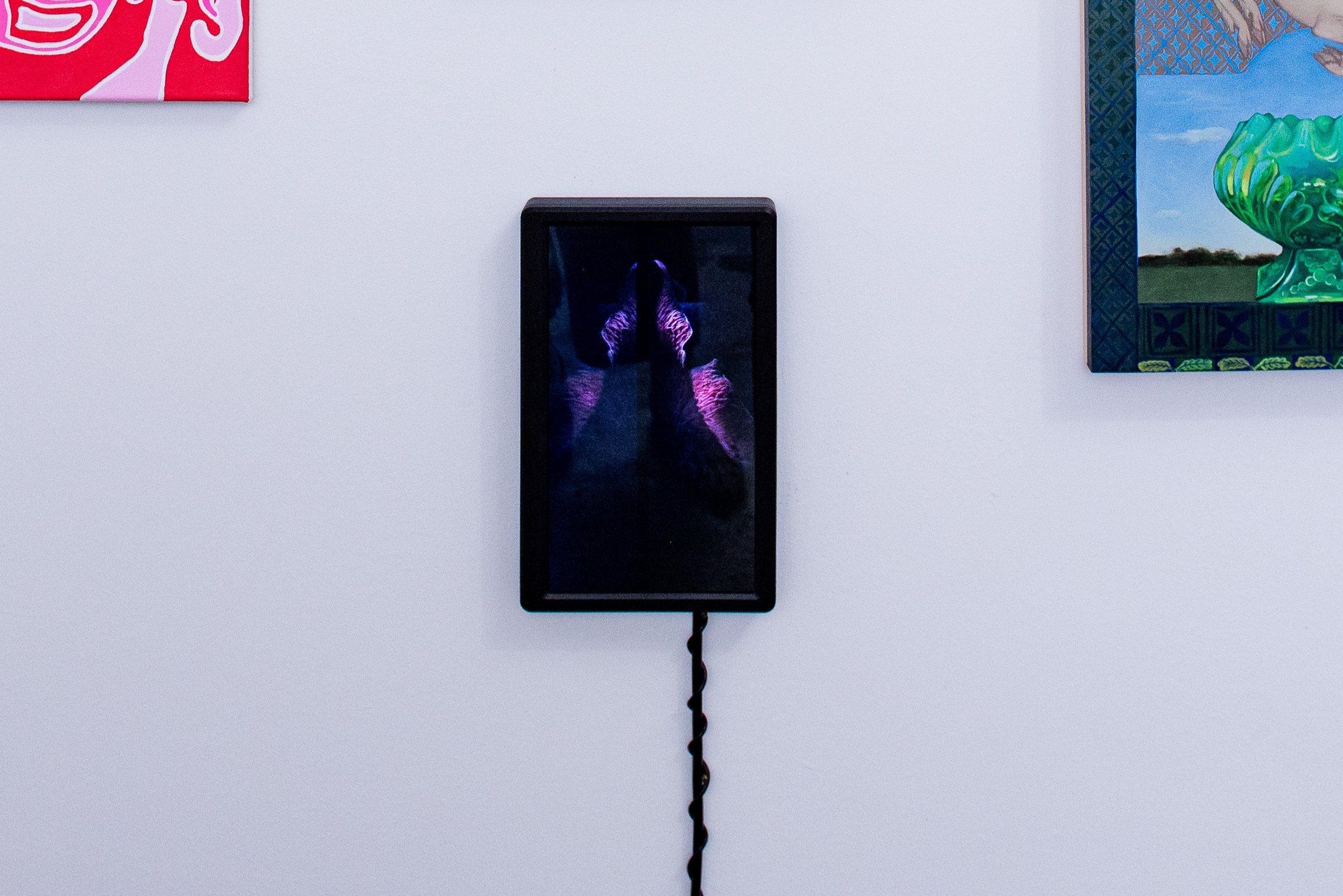
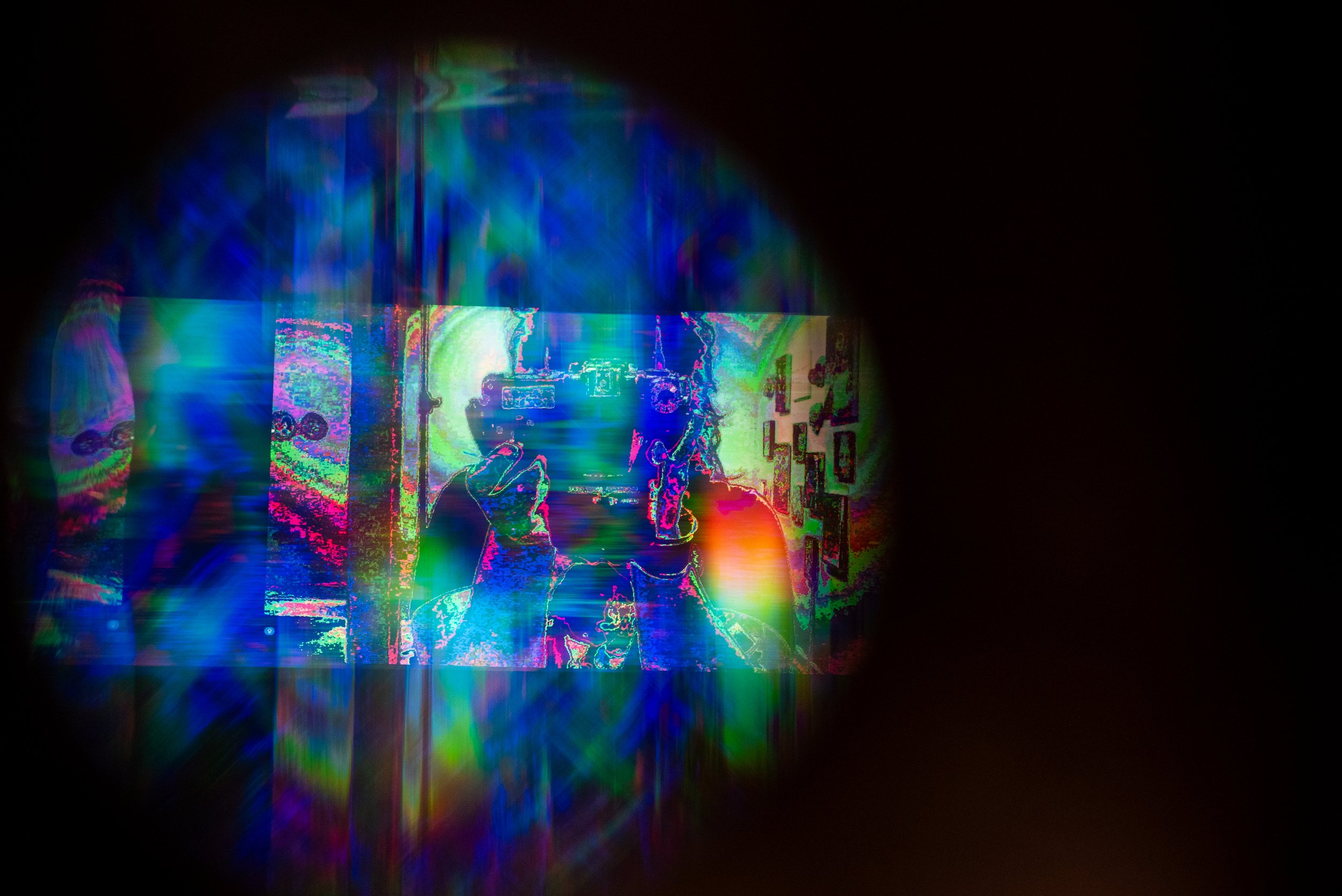
In 1976, Rosalind Krauss described video as a medium of narcissism, a closed circuit in which artist and electronic double fold into one another, severed from history and the world. This feedback loop has now spilled into the everyday, where users continually stage and replay themselves across platforms, measuring existence through the circulation of images. What remains of our reflection when everyone is performing for the mirror? Rather than flattering the self, the work I selected (Through the Looking Glass) exposes perception as contingent, as susceptible to manipulation by devices that script where and how we look.
Manuel Ferreira:
In Ian Park’s Serial Sissies series, the artist examines how horror and pulp cinema use narcissism as both monster and mirror, reflecting society’s anxieties about self-obsession while redefining it through the specific lens of queer experience. In these genres, narcissism becomes a narrative engine for violence—the vanity that cannot accept aging, the ego that cannot process rejection, the self-absorption that justifies destruction—revealing how the horror of narcissism lies not in self-love but in the annihilation of others required to maintain a fractured self-image. Drawing from horror/thriller cinema culture, Park pauses four films featuring queer serial killers and invites us to observe characters who have spent considerable time staring at themselves. Using the visual language of camp and pulp, Park explores how narcissism shaped by trauma, suppression, shame, and desire within queer communities becomes its own kind of horror.
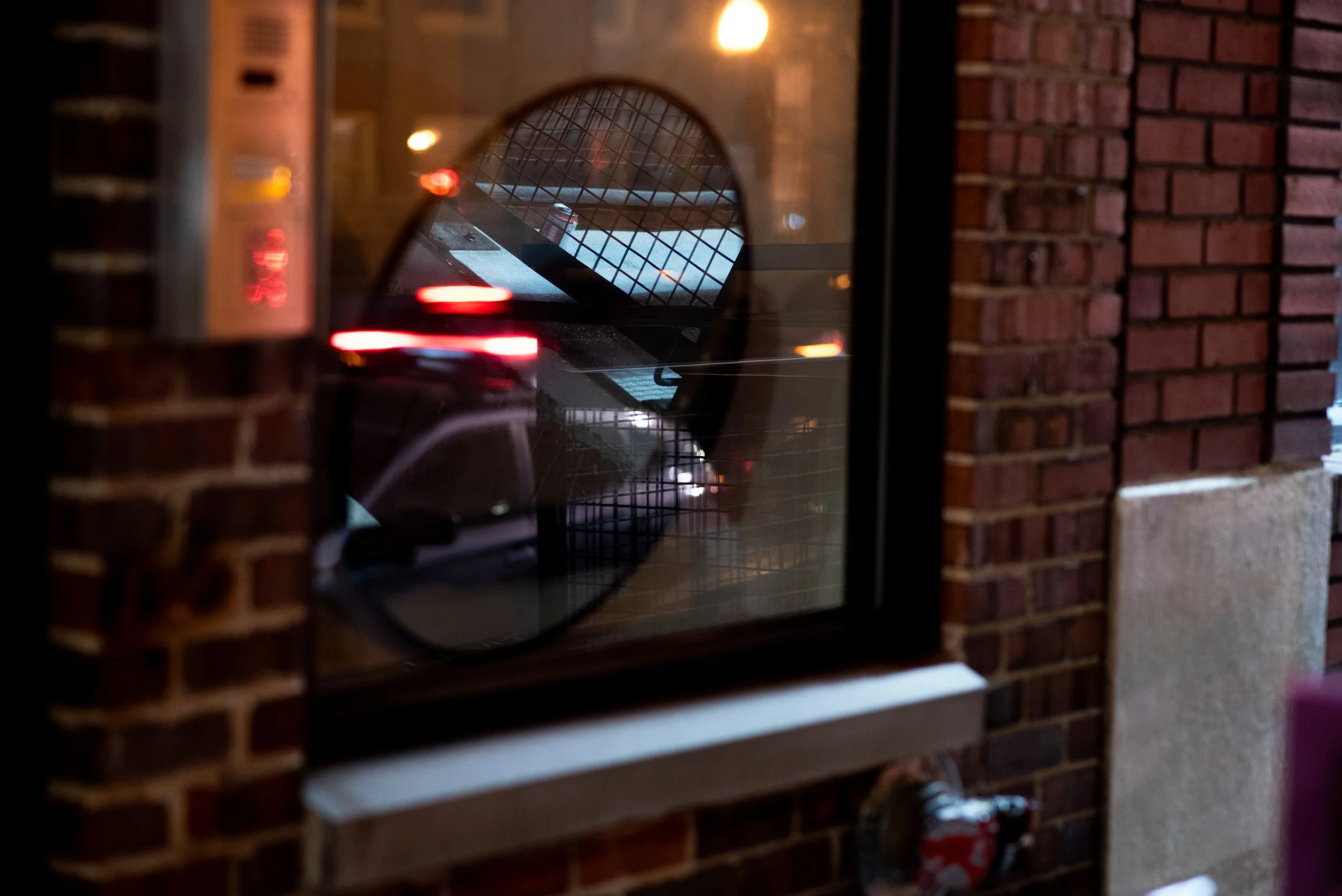
All photos be Erynn McConnell